

TikTok has become one of the most influential discovery and decision-making platforms in cosmetic surgery. Patients are no longer relying solely on Google searches or word of mouth to choose a surgeon. Instead, they are using TikTok to understand procedures, compare approaches, and decide which surgeons feel credible long before they ever book a consultation.
For cosmetic surgeons, TikTok is not about entertainment or chasing trends. It is a platform for visibility at the exact moment potential patients are researching and forming opinions. When used properly, TikTok can increase consultation bookings, improve the quality of enquiries, and shorten the decision-making process by educating patients before they make contact.
The surgeons who succeed on TikTok are not necessarily the loudest or most visible. They are the ones who explain clearly, post consistently, and use the platform with intent. TikTok rewards relevance, clarity, and trust rather than popularity. This makes it uniquely suited to cosmetic surgeons who want to attract informed, serious patients rather than impulse-driven enquiries.
This guide explains how to use TikTok as a genuine growth channel for cosmetic surgery clinics. It covers how to set up your profile so it converts, how to create content that leads to bookings, how often to post, how to measure results properly, and how to operate within professional and regulatory boundaries without limiting growth.
How TikTok Actually Surfaces Your Content (Why This Matters for Surgeons)
TikTok does not prioritise follower count. It prioritises viewer response. Every video you publish is initially shown to a small test audience, and TikTok evaluates how people interact with it before deciding whether to distribute it more widely.
Specifically, the platform looks at how long viewers watch, whether they rewatch sections, whether they save or share the video, and whether they click through to your profile. These signals tell TikTok whether your content is genuinely answering a question or holding attention, rather than simply being scrolled past.
When a video clearly answers a specific question, TikTok is far more likely to continue showing it to users who are searching for, or behaving like, people interested in that topic. This is why educational medical content performs so well on the platform, provided it is focused and precise.
Generic advice rarely performs because it does not solve a clear problem. Focused explanations, delivered clearly and calmly, consistently outperform broad or vague content. This principle should guide every part of your TikTok strategy, from video topics to how you structure your answers.
Setting Up Your TikTok Account for Success
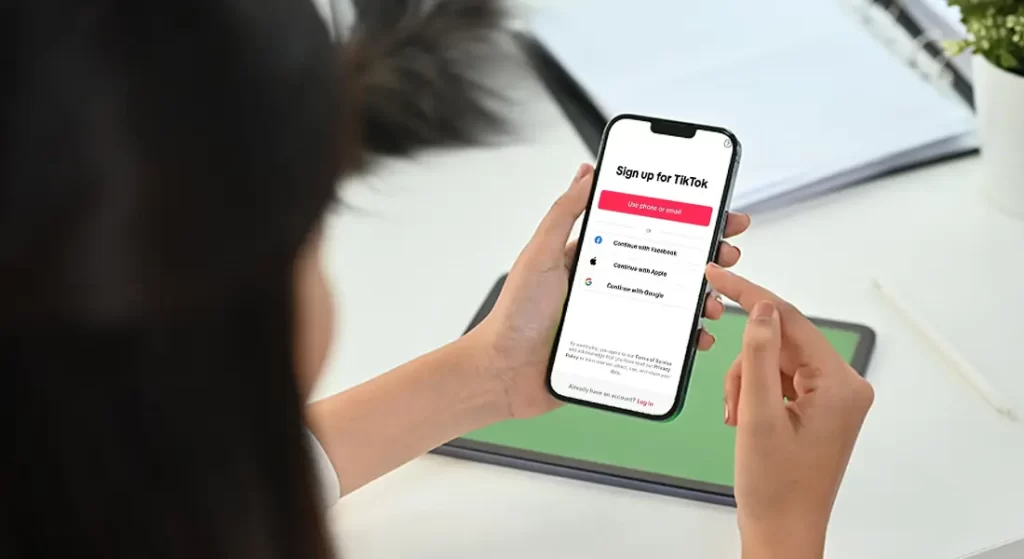
Before you post any videos, your TikTok account needs to be set up correctly. This section covers the foundational decisions that influence how potential patients perceive you and whether they feel confident engaging with your content or taking the next step towards a consultation.
Each step below focuses on a specific part of your TikTok profile and explains both what to do and why it matters.
Step 1: Choosing the Right TikTok Username (This Affects Trust More Than You Think)
Your TikTok username is not branding fluff or a creative exercise. It is one of the first trust signals a potential patient encounters, often before they have watched a single video. In cosmetic surgery, where credibility and professionalism matter enormously, a poorly chosen username can undermine confidence before you ever get the chance to explain your expertise.
Patients frequently discover surgeons through shared videos, screenshots, or links sent by friends and family. When your username appears outside the TikTok interface, it needs to stand on its own and clearly communicate who you are and why you should be taken seriously.
What Your Username Must Do
- Clearly identify you as a medical professional rather than a content creator or influencer
- Be easy to read, easy to remember, and searchable within TikTok
- Avoid gimmicks, stylised spelling, or trend-driven formatting that can cheapen perception
A good username removes ambiguity. Patients should not have to guess whether you are a qualified surgeon or a social media personality.
Good Username Structures
- @drfirstnameplasticsurgery
- @drsurname.cosmeticsurgery
- @drsurname.london (only if your location genuinely plays a key role in how patients choose you)
These formats work because they are descriptive, professional, and immediately understandable. They also perform well in TikTok search results when users look up surgeons by name or specialty.
What to Avoid
- Emojis or decorative symbols
- Abbreviations that are not immediately obvious to a layperson
- Terms commonly associated with social media aesthetics rather than medicine, such as “aesthetics”, “makeover”, “glowup”, or “transformations”
These elements may attract attention, but they often attract the wrong type of attention. They can also weaken trust among patients who are cautious, analytical, or seeking a medically led approach.
A simple test is this: if a patient screenshots your username and sends it to a friend with the message, “What do you think of this surgeon?”, does it still look credible and professional outside TikTok? If the answer is yes, your username is doing its job.
Step 2: Writing a Bio That Sets Clear Expectations
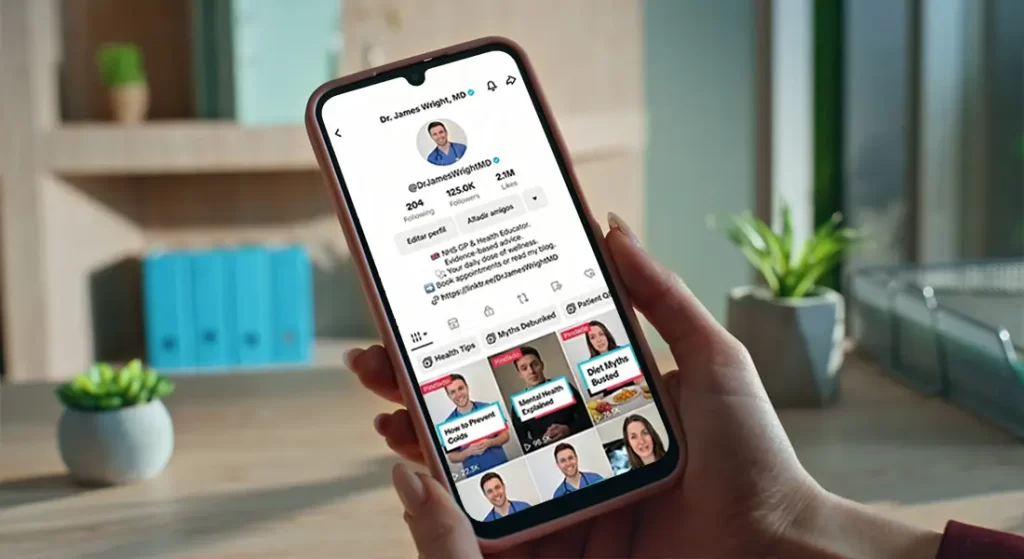
Your TikTok bio is not there to impress or persuade. Its job is to provide clarity. When someone clicks through to your profile, they are trying to understand who you are, what you do, and whether your content is relevant to their situation.
Most viewers reach your bio after watching one or two videos. At that point, they are deciding whether to keep watching, explore your website, or move on. A clear bio helps them orient themselves quickly and reduces uncertainty, which is especially important in cosmetic surgery.
You can think of your bio as quietly answering three simple questions that most potential patients ask, even if they do not consciously articulate them.
- Who is this person?
- Are they medically qualified?
- Is this content relevant to what I am looking for?
If your bio answers those questions clearly, it is doing exactly what it needs to do.
Clarifying Who You Are
The first line of your bio should remove any ambiguity about your role. TikTok contains a mix of surgeons, clinics, practitioners, commentators, and influencers. Being explicit about your professional identity helps viewers immediately understand the context of your content.
Using a clear title such as “Consultant Cosmetic Surgeon” or “Consultant Plastic Surgeon” establishes that you are speaking from a medical perspective. This is not the place for creative phrasing or branding language. Clarity builds confidence far more effectively than clever wording.
Reinforcing Professional Context
Rather than listing qualifications or achievements, use the next line of your bio to describe your area of focus or the type of work you do. This helps viewers understand the scope of your practice without overwhelming them.
For example, stating that you focus on facial procedures, body contouring, or consultation-led cosmetic surgery gives useful context and helps align expectations. It also makes your content easier to interpret, as viewers understand the lens through which you are speaking.
Establishing Relevance
The final part of your bio should help viewers decide whether to continue engaging with your content. This may include mentioning your location if geography matters, or indicating that your videos are educational in nature.
Simple phrases that emphasise explanation, decision-making, or patient education tend to work well. They signal that your content is designed to inform rather than sell, which aligns with how many patients prefer to research cosmetic surgery.
If you include a call to action, keep it low pressure. Directing viewers to consultation information or further educational resources is usually more effective than encouraging immediate booking.
A Simple, Effective Bio Structure
In practice, a clear TikTok bio for a cosmetic surgeon often follows a predictable structure that works well for both patient understanding and platform behaviour. Including your clinic name is usually helpful, provided it is done in a restrained, factual way.
A strong bio structure typically includes:
- Professional title
- Area of focus or specialism
- Clinic name and/or location, if relevant
- Optional next step
Your clinic name works best on the line that provides context, rather than being positioned as a headline or selling point. This reinforces legitimacy and helps patients place you within a real, established practice, without making the bio feel promotional.
When written this way, the bio remains readable and purposeful. It tells the viewer who you are, what you do, where you practise, and what they can do next, while keeping the emphasis on education and professionalism rather than marketing.
What to Avoid
Avoid marketing-led language, exaggerated claims, or slogans. TikTok users are highly sensitive to overt promotion, especially in medical contexts. Overloading your bio with procedures, awards, or buzzwords can make it feel transactional rather than reassuring.
A good TikTok bio does not try to appeal to everyone. It simply explains who you are and what viewers can expect. When done well, it supports your videos, reinforces trust, and helps interested viewers take the next step with confidence.
Example TikTok Bio (Rhinoplasty Surgeon)
The example below uses a fictional surgeon at a fictional clinic and shows a proven framework you can use when writing your own TikTok bio. It demonstrates how to clearly communicate role, specialism, and intent in a way that works well for cosmetic surgeons on TikTok.
Mr John Smith
Consultant Rhinoplasty Surgeon
Explaining nose surgery, recovery and surgical decision-making
Rhinoplasty Centre London
Step 3: Profile Photo – Why “Professional” Doesn’t Mean “Corporate”
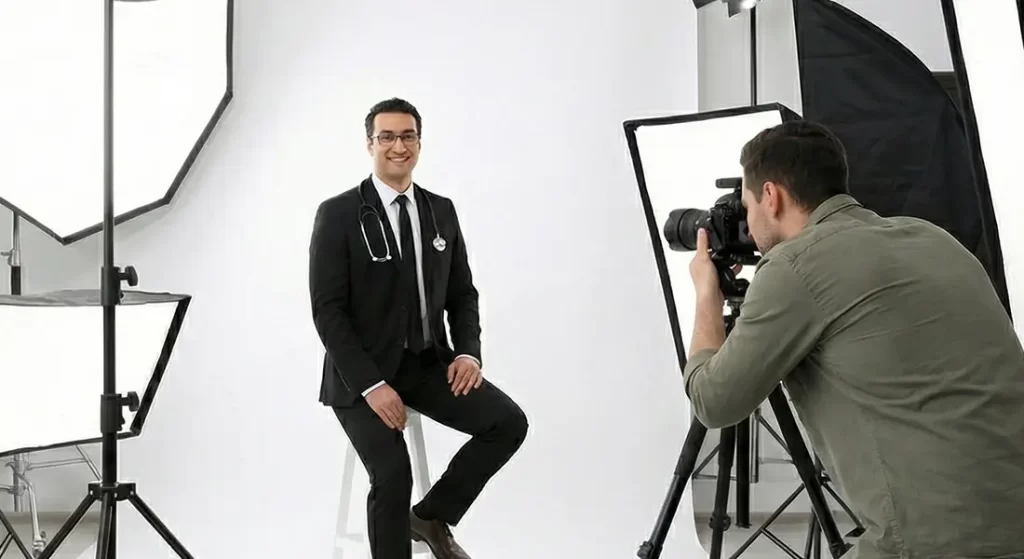
Your TikTok profile photo is displayed at a very small size across the app. In search results, comment threads, and shared links, it is often no larger than a thumbnail. This means fine details, complex backgrounds, and subtle styling choices are lost almost immediately.
For a cosmetic surgeon, the goal of a profile photo is not to look polished or impressive. It is to be instantly recognisable, calm, and credible. Patients should be able to glance at your photo and feel reassured, not distracted.
A strong profile photo also improves performance on TikTok itself. When viewers see your face repeatedly attached to clear, helpful videos, familiarity builds. Over time, this increases watch time and profile clicks because people feel they “know” who they are listening to.
Best practice for profile photos
- Neutral, uncluttered background that keeps attention on your face
- You looking directly at the camera to create a sense of engagement and confidence
- A calm, natural facial expression rather than an exaggerated smile
- Clinical or professional clothing that reflects how patients would see you in real life
White coats often work well, but only if they are authentic to your day-to-day practice. The aim is consistency between how you appear online and how patients encounter you in clinic. Simple, well-lit photos usually outperform highly stylised or heavily retouched headshots because they feel more approachable and trustworthy.
What to avoid
- Group photos, as it becomes unclear who the account belongs to
- Operating room images, which can feel impersonal or unsettling at small sizes
- Lifestyle or social photos that blur the line between professional and personal
Your profile photo is not the place to showcase personality or lifestyle. TikTok already gives you plenty of space to communicate through video. The profile image should act as a stable visual anchor that reinforces professionalism every time your content appears.
In short, your face is your brand on TikTok. Keep it simple, consistent, and recognisable so that viewers can immediately connect your content to you as a surgeon.
Step 4: Linking TikTok to the Right Page
In most cases, linking your TikTok profile directly to your clinic homepage is the best option. This is what the vast majority of clinics and brands do, and there is no inherent issue with using the homepage as your primary destination.
What matters is that your website is well structured and easy for users to navigate. People clicking through from TikTok should be able to quickly understand who you are, what your clinic offers, and how to take the next step.
Your homepage should clearly present key information and include an obvious call to action, such as booking a consultation or contacting the clinic. As long as this is in place, there is no need to overcomplicate the user journey or create separate pages specifically for TikTok traffic.
The role of TikTok is to introduce your clinic and build interest. Your website’s role is to support that interest by making it straightforward for users to move from viewing content to making an enquiry.
Step 5: Developing Your TikTok Content Strategy

Before deciding what to post, how often to post, or what tools to use, you need to define your content strategy. This is simply about being clear on what your TikTok content is meant to do and what it is not meant to do.
For cosmetic surgeons, TikTok is not a platform for constant promotion or performance-based content. Its role is to support how patients research, understand, and gain confidence before taking the next step.
A clear TikTok content strategy for a cosmetic surgery practice should focus on four things:
- Explaining procedures, recovery, and suitability in plain language
- Showing how you or your clinic approach clinical decision-making
- Building familiarity and confidence over time through consistent messaging
- Supporting interest with appropriate proof, such as testimonials, without relying on them
This framework keeps your content purposeful. Each video should clearly support one of these objectives rather than existing in isolation.
Testimonials, for example, should be included deliberately as a supporting content type. They are not a substitute for explanation or education, but they can reinforce what you have already communicated about consultations, recovery, or patient experience. By defining their role upfront, testimonials add credibility without distracting from the core educational focus.
Once your strategy is clear, planning becomes far simpler. Instead of asking “What should we post?”, you can ask “Which part of our strategy does this video support?” This keeps your TikTok output consistent, relevant, and easier to manage over time.
The sections that follow break this strategy into practical components, covering the different types of content you should publish, how to structure them, how often to post, and how to assess whether your content is doing its job.
Types of Content to Include in Your TikTok Strategy

Once your content strategy is defined, the next step is deciding what types of content you will actually publish. TikTok works best when you use a small number of repeatable formats rather than trying to do everything.
For cosmetic surgeons and clinics, content should stay focused on explanation, clarity, and credibility. The formats below cover what works reliably without turning TikTok into a performance exercise.
Educational Short-Form Videos
Educational short-form videos should form the core of your TikTok presence. These are short videos where you explain one specific point clearly, in the same way you would answer a question during a consultation.
The key is focus. Each video should answer one question or address one concern. Trying to cover too much in a single video usually reduces clarity and engagement.
Practical guidance:
- Keep each video focused on one topic only
- Frame the video around a real patient question
- Use plain language rather than medical terminology
- Aim for clarity rather than speed or entertainment
Examples of effective topics include recovery timelines, suitability considerations, common misconceptions, and what happens during consultations. These videos work because they mirror how patients actually think and search for information.
Talking-Head Explanations (Surgeon or Clinician on Camera)

Simple talking-head videos, filmed directly to camera, tend to perform very well in medical contexts. They feel personal without being informal and allow patients to get used to how you speak and explain things.
These videos are particularly effective for explaining judgement and decision-making, such as why certain procedures may or may not be appropriate.
Practical guidance:
- Speak as if you are answering one patient, not an audience
- Maintain a calm, neutral tone
- Avoid scripting word-for-word; use bullet prompts instead
- Keep delivery natural and professional
Consistency matters more than performance. Over time, familiarity builds trust.
Educational Images and Static Posts
Although TikTok is video-led, static images can still play a role, especially when used to reinforce key points or explain concepts visually.
Images work best when they are simple and explanatory rather than promotional. They should support understanding rather than try to impress.
Practical guidance:
- Use images to highlight key facts, timelines, or concepts
- Avoid overly designed graphics or marketing-style layouts
- Keep text minimal and easy to read on a phone screen
- Use images to complement, not replace, video content
Static posts are particularly useful for summarising common questions or reinforcing messages from your videos.
Testimonials and Patient Experience Content
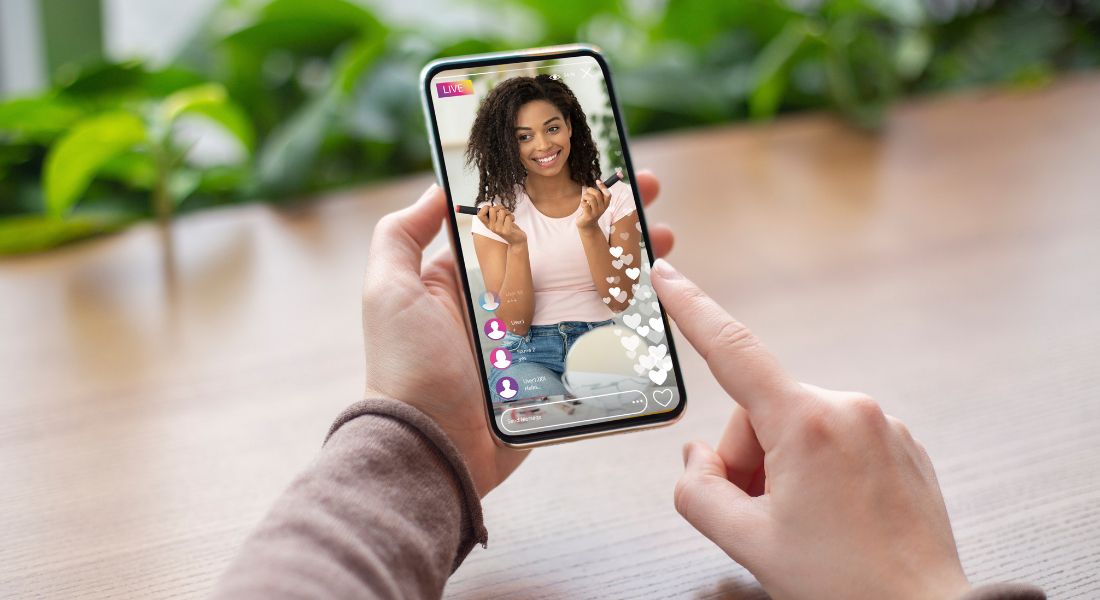
Testimonials should be included as a supporting content type, not a primary one. On TikTok, they work best when they reinforce information you have already explained elsewhere.
Short, simple testimonials that focus on patient experience rather than outcomes tend to feel more credible and appropriate.
Practical guidance:
- Keep testimonials short and unscripted
- Focus on experience, reassurance, or understanding rather than praise
- Avoid dramatic storytelling or exaggerated language
- Always ensure clear, documented consent
Testimonials are most effective when used sparingly and in context, rather than as standalone promotional content.
Behind-the-Scenes and Process Content

Light behind-the-scenes content can help demystify the process without becoming informal. This might include showing consultation rooms, preparation steps, or how clinics operate day-to-day.
The aim is familiarity, not exposure.
Practical guidance:
- Avoid filming patients unless fully consented
- Focus on process rather than people
- Keep tone professional and informative
- Use this content to reduce uncertainty rather than entertain
This type of content works well alongside educational videos.
Posting Frequency and Cadence (One Daily Post)
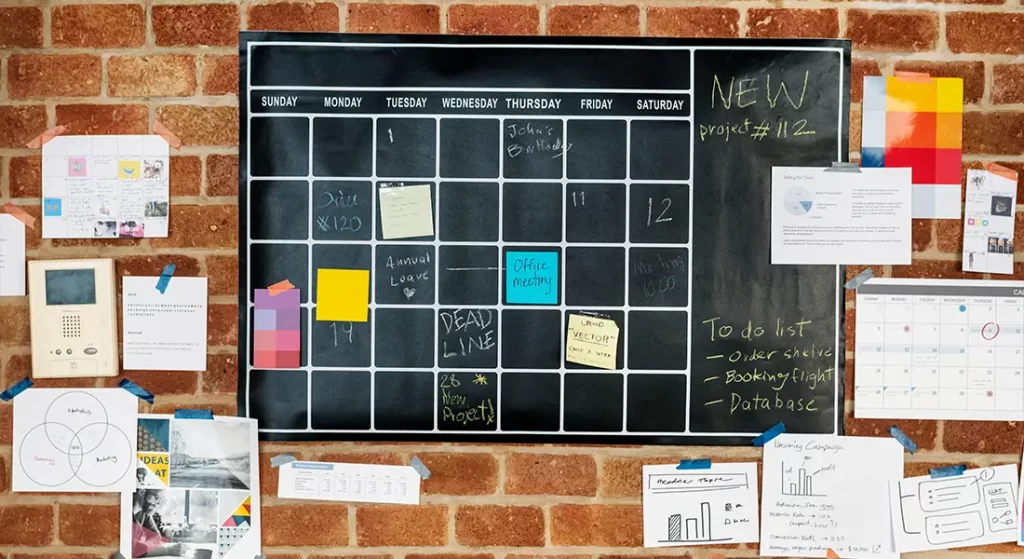
Posting once per day on TikTok is a realistic and effective approach for cosmetic surgeons and clinics, provided the content is planned and sustainable. A daily post keeps your account active, increases familiarity, and allows different aspects of patient education to be covered over time without relying on any single video to perform.
The key is not spontaneity, but structure. Daily posting works best when each post has a defined purpose within your wider content strategy.
Rather than trying to be creative every day, it is more effective to rotate through a small number of repeatable content types. This keeps planning simple and ensures your content stays balanced.
How to Structure Daily Posting
A one-post-per-day approach should mix education, explanation, reassurance, and supporting proof. Each day focuses on a different aspect of the patient journey, so over the course of a week, viewers gain a rounded understanding of procedures, recovery, and how your clinic operates.
Daily posting also works well with batch filming. Many clinics film one to two weeks of content in a single session and schedule posts in advance, which avoids disruption to clinical work.
Example TikTok Content Calendar (One Post Per Day)
| Day | Content Type | Topic / Focus | Purpose |
| Monday | Educational short video | How long swelling usually lasts after a procedure | Set expectations |
| Tuesday | Talking-head explanation | What happens during a first consultation | Explain process |
| Wednesday | Recovery-focused video | Common recovery concerns patients worry about unnecessarily | Reduce anxiety |
| Thursday | Educational short video | Who may not be suitable for the procedure | Show judgement |
| Friday | Testimonial (short clip) | Patient describing feeling informed and prepared | Support credibility |
| Saturday | Myth clarification video | A common misconception explained plainly | Correct misinformation |
| Sunday | Process or clinic content | How consultations are structured or how the clinic operates | Build familiarity |
This structure ensures that education remains the core focus, while testimonials and process content support it rather than dominate.
Making Daily Posting Sustainable
Daily posting does not mean daily filming. The most practical approach is to:
- Keep videos short and focused
- Film multiple videos in one session
- Reuse the same filming setup each time
- Rotate topics using a simple weekly structure
If maintaining a daily schedule becomes difficult, it is better to reduce frequency slightly than to post inconsistently. Consistency over time matters more than rigid adherence to a schedule.
The Practical Takeaway
Posting once per day can work very well for cosmetic surgeons when content is planned, repeatable, and aligned with patient questions. A structured weekly rotation removes pressure, keeps content balanced, and allows TikTok to support patient education and enquiries without becoming a burden on your practice.
How to Film Your TikTok Videos
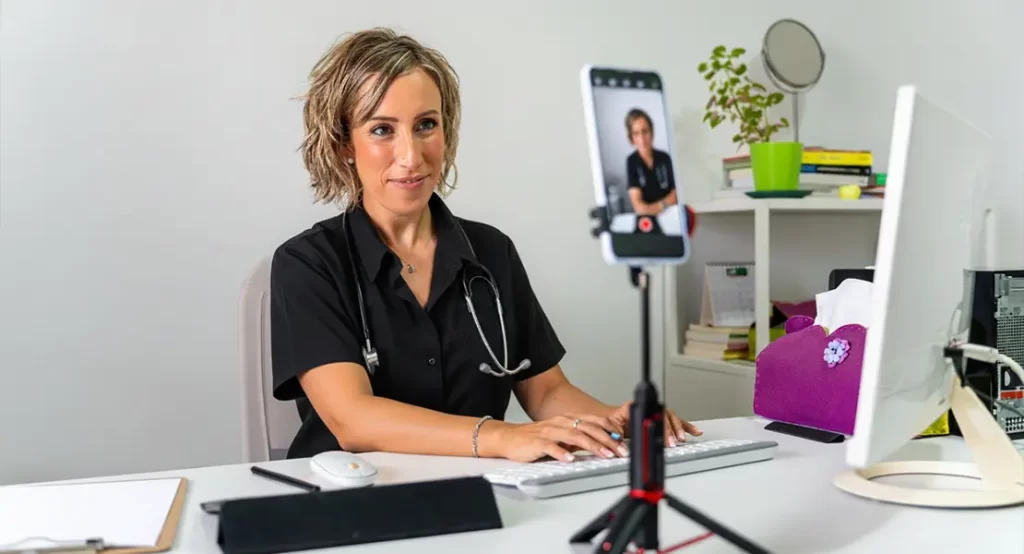
You do not need professional cameras or a production team. For most clinics, a modern smartphone is the easiest, most cost-effective option and produces more than sufficient quality.
Recommended Filming Setup
- Use a recent smartphone with a good front-facing camera
- Film vertically
- Position the phone at eye level
- Use natural light where possible, facing a window
- Keep the background clean and uncluttered
Clear audio matters more than perfect visuals. If possible, use a simple clip-on microphone, but a quiet room is often sufficient.
Avoid filming from below, moving the camera, or changing locations mid-video. Consistency helps viewers focus on what you are saying.
Post-Production: Editing Videos and Images
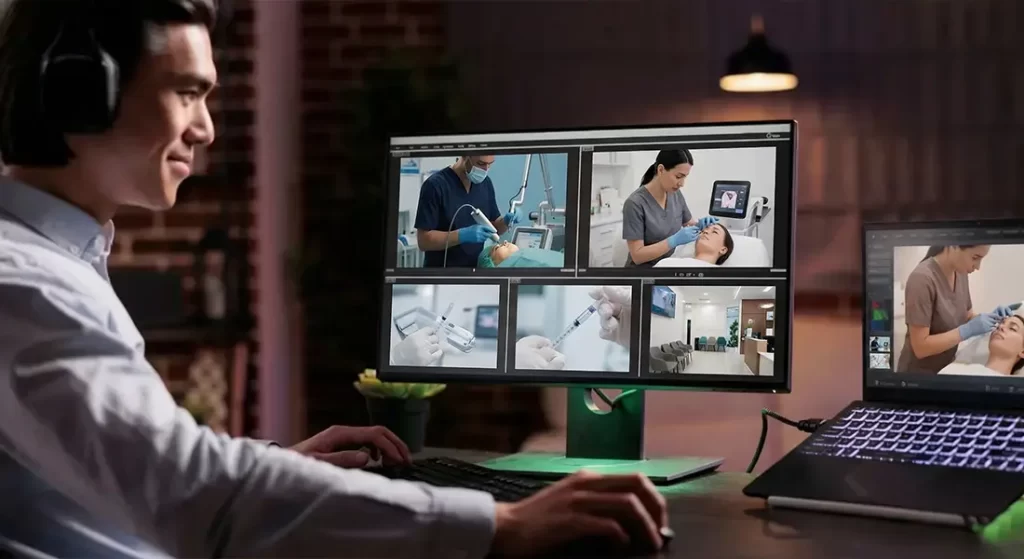
Post-production plays an important role in how professional and credible your TikTok content appears. For cosmetic surgeons, quality and aesthetics matter, but they need to be applied with control. The goal is to produce content that looks considered, clean, and consistent, without distracting from the information being shared.
Well-edited content signals attention to detail and professionalism. Poor editing, inconsistent visuals, or rushed presentation can undermine trust just as quickly.
Video Editing: Clean, High-Quality, and Controlled
Video editing should improve clarity and presentation, not change the substance of what is being said. High-quality editing in this context means smooth delivery, clear visuals, and a calm, professional finish.
Good practice includes:
- Trimming pauses, restarts, or errors to keep the video focused
- Keeping cuts smooth and unobtrusive
- Ensuring lighting and colour look natural and consistent
- Avoiding visual effects or transitions that draw attention to themselves
A well-edited video should feel effortless. The viewer should focus on the explanation, not the editing.
Captions and Sub-Headings (On-Screen Text)
Captions are essential for accessibility and clarity, and they contribute to the overall visual quality of your content. Well-written, well-designed captions make videos easier to follow and more professional.
Best practice includes:
- Using accurate wording that reflects what is being said
- Keeping text clear, well spaced, and easy to read on a phone screen
- Using short lines rather than large blocks of text
- Maintaining consistent font style and placement across videos
Sub-headings can be used sparingly to orient the viewer, such as highlighting a recovery phase or a suitability point. They should guide attention, not act as marketing headlines.
Video Editing Tools (CapCut)

CapCut is a practical and widely used tool for TikTok video editing because it allows a high standard of finish without unnecessary complexity. It works well for clinics that want control over quality while keeping the process efficient.
CapCut is suitable for:
- Precise trimming and sequencing
- Adding clean, readable captions
- Making small timing and pacing adjustments
- Exporting videos in the correct format for TikTok
CapCut is not the only option, but it strikes a good balance between control and simplicity. Regardless of the tool used, the same standard applies: editing should enhance clarity and visual consistency, not add decoration.
Background Music: Subtle and Intentional
Background music can be used, but only when it supports the tone of the content. If included, it should be subtle and never compete with speech.
Good practice includes:
- Keeping music volume low
- Choosing neutral, understated tracks
- Avoiding upbeat or trending music that clashes with clinical topics
Many high-quality medical videos work better without music at all. Clear speech and a calm setting often feel more appropriate and professional.
Image Editing: Professional and Consistent
Static images and sliders should be edited with the same attention to quality as video. Professional images are clear, well-lit, and consistent in style.
Best practice includes:
- Using high-resolution original images
- Cropping accurately for vertical viewing
- Making light adjustments to brightness or contrast where needed
- Keeping text minimal and easy to read
Images should look like they belong in a clinical setting or consultation explanation, not like promotional graphics.
Image Editing Tools
For image editing, built-in smartphone tools are often the most reliable starting point. They preserve image quality and allow precise, natural adjustments.
If text or simple labels are required, basic design tools can be used to add headings or annotations. These should be applied consistently and sparingly, with an emphasis on readability rather than design flair.
A Practical Standard to Aim For
High-quality TikTok content for cosmetic surgeons is defined by clarity, consistency, and visual control. Editing should elevate presentation without becoming the focus.
If your content looks calm, clean, and professionally considered — and your explanations are easy to follow — your post-production is doing its job.
Here is a clear, practical analytics section written in the same grounded tone as the rest of the article. It avoids vanity metrics, avoids exaggerated claims, and focuses on what actually matters for a cosmetic surgery practice.
You can drop this in as a standalone section.
Analytics and Metrics: What to Track (and What to Ignore)

Analytics on TikTok are useful, but only if you look at the right signals. Many clinics focus on views and likes because they are visible and easy to understand. In practice, those numbers tell you very little about whether TikTok is contributing to enquiries or better consultations.
The purpose of analytics is not to chase performance. It is to understand whether your content is doing its job.
Metrics That Matter
For cosmetic surgeons, the most useful metrics are behavioural rather than superficial. These tell you whether viewers are progressing from passive watching to active interest.
Key metrics to monitor include:
- Profile visits per video
- Link clicks from your profile
- Enquiries that mention TikTok as a source
- How informed patients are when they arrive for consultation
Profile visits are particularly important. They indicate that a viewer found your content credible enough to want to learn more about who you are. A video with fewer views but a higher proportion of profile visits is often more valuable than a high-view video that leads nowhere.
Link clicks matter because they show intent. You are not looking for volume alone, but for steady, repeatable movement from TikTok to your website.
Engagement Metrics to Use Carefully
Likes, comments, and shares can be useful signals, but they should be interpreted with caution.
For example:
- A high number of comments may reflect confusion, not clarity
- Shares may indicate interest, but not intent
- Likes often reflect agreement, not action
These metrics are best used comparatively. If one type of video consistently generates more profile visits or link clicks than another, that tells you something useful about what resonates.
Watch Time and Retention
Watch time and retention give insight into whether your explanations are clear and engaging.
You do not need to analyse these in detail, but they are helpful for spotting obvious issues. If viewers consistently drop off early, your openings may be unclear or too long. If retention is strong, it usually means the topic and structure are working.
In medical content, clarity almost always improves retention more than entertainment.
Qualitative Indicators That Matter More Than Numbers

Some of the most valuable feedback does not appear in analytics dashboards.
Pay attention to:
- Patients mentioning TikTok during consultations
- Patients referencing specific videos or explanations
- Patients arriving with realistic expectations
- Comments such as “I feel like I already understand how you work”
These are strong indicators that your content is doing what it should: educating, reassuring, and preparing patients before they make contact.
How Often to Review Analytics
Analytics should be reviewed regularly, but not obsessively.
A simple approach is to:
- Review performance weekly at a high level
- Look for patterns rather than individual outliers
- Adjust topics and formats gradually
Avoid reacting to single videos that perform unusually well or poorly. Consistency over time matters more than spikes.
A Practical Way to Use Analytics

The most effective way to use analytics is to ask simple questions, such as:
- Which videos lead to more profile visits?
- Which topics are referenced most often by patients?
- Which formats feel easiest to produce and explain clearly?
If a type of content repeatedly supports better consultations and clearer patient understanding, it is doing its job, even if it does not generate the highest view count.
The Takeaway
TikTok analytics are useful when they help you understand patient behaviour, not when they distract you with vanity metrics. Focus on indicators of intent, clarity, and progression rather than raw popularity.
If TikTok leads to better-informed enquiries and more productive consultations, it is working — regardless of view counts.
Paid Options on TikTok: What’s Available to Cosmetic Surgeons
TikTok offers several paid promotion options, but they are not all suitable for cosmetic surgery. Understanding what each option does — and when to use it — is essential before spending any budget.
At a high level, TikTok paid activity falls into four categories:
- Boosting existing posts (Promote)
- In-feed ads created in Ads Manager
- Lead generation ads
- Awareness-focused formats (used sparingly)
Each serves a different role in the patient journey. Used incorrectly, they can waste budget or create compliance risk. Used correctly, they extend the reach of high-quality educational content.
Option 1: Boosting Existing Posts (TikTok Promote)

Boosting an existing post is the simplest and lowest-risk way to use paid promotion on TikTok. You are not creating new advertising creative; you are increasing the distribution of a video that already exists on your profile.
For cosmetic surgeons, this is usually the best place to start with paid activity because the content has already been published organically and is already visible to the public.
How boosting works
When boosting a post, you select an existing video and choose:
- A goal, such as profile visits, website visits, or video views
- A basic audience definition, typically location and age range
- A budget and duration
The video itself does not change. Captions, comments, likes, and context remain intact. This matters because boosted posts retain the natural look and behaviour of organic TikTok content, rather than feeling like standalone adverts.
Boosting is therefore best understood as amplification, not advertising creation.
When boosting works well
Boosting tends to work best when:
- A video already performs well organically relative to your usual content
- The topic is educational, explanatory, or process-focused
- The tone is calm, factual, and measured
- The video attracts profile visits, saves, or thoughtful comments
In these cases, boosting simply helps the right content reach more people who are likely to be asking similar questions. You are not testing messaging from scratch; you are extending something that already resonates.
When not to boost
Boosting should be avoided for content that:
- Focuses heavily on before-and-after imagery
- Uses promotional language, inducements, or offers
- Relies on emotional triggers rather than explanation
- Could be misunderstood if viewed without context
- Risks creating unrealistic expectations
Because boosted posts reach wider and less familiar audiences, scrutiny increases along with visibility.
Option 2: In-Feed Ads via TikTok Ads Manager
In-feed ads appear between organic videos in the For You feed and are created specifically as paid placements through TikTok Ads Manager. Unlike boosted posts, these ads are planned, targeted, and optimised as part of a structured acquisition strategy.
For cosmetic surgeons, in-feed ads are typically used to generate consultation enquiries at scale, while maintaining the same professional standards expected of medical marketing.
These ads offer greater control over targeting, budgeting, optimisation, and reporting, which makes them suitable when consistent lead flow and return on spend are priorities.
When to use in-feed ads
In-feed ads are used when you want to generate more consultation bookings than organic reach alone can deliver.
They are most appropriate when:
- You want to increase booking volume in a predictable way
- You want consistent traffic to your website or consultation page
- You are targeting patients in a specific geographic area
In-feed ads are not for occasional exposure. They are used as an ongoing paid channel to support steady enquiry generation.
Creative approach for in-feed ads
Although these are paid placements, the creative should still align with how people consume content on TikTok. Ads that feel overly promotional or detached from normal TikTok behaviour tend to underperform.
Effective in-feed ads for cosmetic surgery typically:
- Open with a clear, patient-relevant topic or concern
- Communicate confidence and clinical competence
- Keep explanations concise and accurate
- Lead naturally to a clear next step, such as learning more or booking a consultation
Calls to action should be clear but measured. Language such as “find out more”, “see how consultations work”, or “request a consultation” is usually more effective than urgency-driven messaging.
The objective is to move interested viewers into a consultation pathway that is already designed to convert.
Understood. You’re right — this should be clear, accurate, and not misleading.
For paid TikTok ads, the correct guidance is to send traffic to a dedicated landing page, not a surgeon bio page or a generic page unless it has been deliberately rebuilt to function as one.
Here is the corrected, clean version of the section. You can replace the previous text entirely with this.
Destination Pages and Conversion
TikTok ads should lead to a dedicated landing page that is designed specifically to receive paid traffic and convert it into consultation bookings.
Paid ads introduce cold or semi-cold audiences. Sending that traffic to unfocused pages reduces conversion rates and wastes budget.
A good TikTok landing page should:
- Continue the same message and topic as the ad
- Establish trust quickly and clearly
- Explain what happens next in simple terms
- Make the booking action obvious and easy
The page does not need to be aggressive or sales-heavy, but it must be intentional. It should exist for one purpose: moving an interested viewer from the ad into a consultation pathway.
Sending TikTok ad traffic to a generic homepage or informational page only works if that page has been deliberately structured to function as a landing page. In most cases, a purpose-built landing page will outperform it.
The most effective TikTok ad funnels feel continuous. The viewer should feel like they are stepping naturally from the video into the next stage of the journey, not being redirected elsewhere.
Option 3: Lead Generation Ads

Lead generation ads allow potential patients to submit their details directly within TikTok, without visiting your website or landing page first. Like all paid formats, the aim is to generate more enquiries and bookings.
The difference is where the evaluation happens.
With lead ads, the enquiry happens immediately. This increases volume, but it also means prospects often submit their details before fully understanding the procedure, process, or suitability criteria.
How Lead Generation Ads Behave
Because users do not pass through a landing page first, lead ads typically generate:
- Higher enquiry volume
- Faster initial responses
- A broader range of intent
- More follow-up required to qualify bookings
This is not a drawback — it simply shifts the workload.
With lead ads, the filtering and education that would normally happen on your website happens later, during follow-up.
How This Compares to In-Feed Traffic Ads
- In-feed traffic ads perform more filtering before the enquiry
- Lead generation ads require more filtering after the enquiry
Both approaches can generate bookings. The difference is operational, not strategic.
Practical Implication for Clinics
Lead generation ads require your clinic to handle enquiries efficiently and consistently. Without a structured follow-up process, higher enquiry volume does not automatically translate into more bookings.
When used deliberately, lead ads can increase booking opportunities. When used casually, they can inflate admin workload without improving outcomes.
Option 4: Awareness-Focused Formats
TikTok also offers high-reach awareness formats such as TopView and brand takeovers. These formats are typically used by large consumer brands rather than medical practices.
They offer visibility, but little nuance.
For most cosmetic surgeons and clinics, these formats:
- Are unnecessary
- Are costly relative to their value
- Provide limited control over message interpretation
They are generally best avoided.
You’re right — that wording unnecessarily implies restriction, when in reality all clinics want more enquiries and bookings, and paid ads exist to do exactly that.
Choosing the Right Paid Option
For cosmetic surgery clinics, paid TikTok activity is about increasing enquiries and bookings in a controlled, scalable way.
Most clinics follow a progression that reflects how demand grows and how paid spend becomes more predictable over time:
- Establish a credible organic presence that reflects how the clinic communicates and operates
- Boost organic posts that already attract interest to increase reach and visibility
- Use in-feed ads to generate consistent consultation enquiries at scale
- Use lead generation ads where higher enquiry volume is required and follow-up systems are in place
Each option serves the same commercial goal — generating bookings — but does so through different mechanics.
Paid promotion works best when it builds on messaging that is already clear and effective. Strong foundations make paid spend more efficient, reduce wasted budget, and improve booking quality.
The objective is not to limit enquiries, but to increase them in a way that the clinic can handle operationally and convert reliably.
Compliance Considerations for Paid TikTok Advertising
Paid TikTok advertising for cosmetic surgery is subject to greater scrutiny than organic content. This is not about limiting growth or enquiry volume, but about ensuring that advertising remains accurate, responsible, and defensible as visibility increases.
When you pay to distribute content, you are actively placing it in front of a wider and less familiar audience. That increases reach, but it also increases the likelihood of regulatory, platform, or public scrutiny.
Core principles to apply before promoting any content
Before running or boosting any paid TikTok content, ensure that:
- All statements are factual, proportionate, and capable of being supported
- Outcomes are not presented as guaranteed, predictable, or uniform
- Language does not imply certainty where variability exists
- No direct or indirect comparisons are made with other surgeons, clinics, or treatments
- Claims are descriptive rather than persuasive
- Visuals are clearly contextualised and not misleading when viewed in isolation
Paid ads should reflect how information would be explained in a consultation setting, not how it might be simplified for marketing impact.
Language and tone in paid ads
Tone matters as much as content. Paid TikTok ads should remain neutral, professional, and explanatory.
Avoid:
- Absolutes (“always”, “guaranteed”, “perfect result”)
- Emotional pressure or urgency
- Time-limited framing or inducements
- Over-simplification of risks, recovery, or suitability
Clear, measured language protects both compliance and long-term trust.
Visual and contextual considerations
Paid content is often viewed out of context. A video may be shared, clipped, or seen without captions or surrounding explanation.
For this reason:
- Visuals should not rely on implied meaning
- Any demonstration or illustration should be clearly explained
- Before-and-after style visuals should be handled with particular care
- Content should still make sense if viewed alone
Assume that a regulator, journalist, or patient could see the content without additional explanation.
Ongoing responsibility
Once content is promoted, it becomes more permanent in effect.
You should always assume that:
- Paid ads may be reviewed by regulators
- Videos may circulate beyond TikTok
- Context may be removed or misinterpreted
- Screenshots or recordings may exist long after the campaign ends
This does not mean avoiding paid advertising. It means applying the same professional standards consistently as reach increases.
A sensible way to think about compliance
Compliance is not a barrier to generating enquiries or bookings. It is a framework that allows clinics to scale paid activity confidently and sustainably.
Well-structured, compliant ads:
- Protect reputation
- Reduce risk
- Build trust with a wider audience
- Support long-term growth
The purpose of compliance is to ensure your TikTok ads run consistently without being rejected, restricted, or causing account-level issues that disrupt paid activity.
Frequently Asked Questions
Is TikTok actually worth it for cosmetic surgeons?
Yes, when used properly. TikTok has become a major discovery platform where patients research procedures, recovery, and surgeons well before booking a consultation. Clinics that use TikTok to explain, educate, and build familiarity often see better-informed enquiries and stronger brand recall compared to clinics that rely only on search or traditional social media.
How long does it take for TikTok to start generating enquiries?
There is no fixed timeline. Some clinics see enquiries within weeks, while others take several months. TikTok works cumulatively, with patients often watching content repeatedly before taking action, so results usually build over time rather than appearing after a single video.
Do I need to appear on camera myself as the surgeon?
In most cases, yes. Surgeon-led content consistently performs better because patients want to see who they may trust with a procedure. Videos where the surgeon explains procedures, recovery, and decision-making tend to build more confidence than anonymous clinic content alone.
How often should a cosmetic surgeon post on TikTok?
Consistency matters more than volume. Many clinics post once per day or a few times per week, but the key is choosing a posting schedule that can be maintained long term. Irregular posting often performs worse than a steady, predictable rhythm.
Can TikTok replace Google Ads or SEO for my clinic?
No. TikTok should be viewed as a complementary channel, not a replacement. Search channels capture patients who are actively looking to book, while TikTok influences earlier-stage research and consideration. The strongest marketing strategies use both together.
Is paid advertising on TikTok safe for cosmetic surgery clinics?
It can be, provided ads follow platform rules and advertising standards. Problems usually arise from exaggerated claims, guarantees, or inappropriate visuals. When ads are factual, neutral, and aligned with clinical reality, TikTok can be a reliable paid channel.
Should TikTok ads always lead to a booking page?
TikTok ads should lead to a dedicated landing page designed specifically for paid traffic. That page should clearly explain the next step and make booking easy, while remaining professional and informative rather than aggressive.
Are before-and-after videos allowed on TikTok?
This depends on how they are presented and whether they comply with platform rules and advertising regulations. Many clinics choose to limit reliance on before-and-after content and instead focus on explanations, recovery, and process to reduce risk.
How do I measure whether TikTok is actually working?
Look beyond views and likes. More useful indicators include profile visits, website clicks, consultation bookings, patient references to TikTok during consultations, and overall return on investment from paid activity.
Can an agency manage TikTok without losing my personal voice?
Yes, provided the agency specialises in medical marketing and works collaboratively. At Clinic Engine, the focus is on preserving the surgeon’s voice, tone, and clinical approach while handling strategy, structure, and execution behind the scenes, with a clear emphasis on driving bookings and measurable return on investment. This allows TikTok to remain authentic and surgeon-led without requiring you to manage every post, caption, or advert yourself.
Final Thoughts
Running TikTok properly for a cosmetic surgery clinic involves far more than posting occasional videos. It requires clear strategic planning, consistent content direction, awareness of compliance and platform rules, performance tracking, and alignment with your wider marketing funnel. For many surgeons and clinic owners, managing all of this personally can quickly become time-consuming and distracting.
If you don’t want to micromanage your social media and digital marketing, working with a specialist agency can remove that burden while still delivering consistent, measurable results.
Here at Clinic Engine, we work exclusively with private medical and cosmetic clinics. We understand the regulatory environment you operate in, how patients research and make decisions, and what genuinely drives enquiries and bookings in this sector.
Our role is to do the heavy lifting for you. This includes defining the right TikTok strategy, shaping content that accurately reflects how you practise, managing both organic and paid activity, ensuring compliance, and aligning everything with your website and consultation pathways.
We don’t chase trends or vanity metrics. Our focus is on sustainable growth, enquiry generation, and protecting your clinic’s reputation while scaling visibility in a controlled, professional way.
Clinic Engine has a proven track record of helping clinics grow through clear messaging, structured content systems, and paid strategies designed to convert without risking account issues or compliance problems.
If you want TikTok — and your wider marketing — handled professionally, without needing to oversee every post, caption, or advert, partnering with a specialist agency allows you to stay focused on clinical work while your marketing runs reliably in the background.