
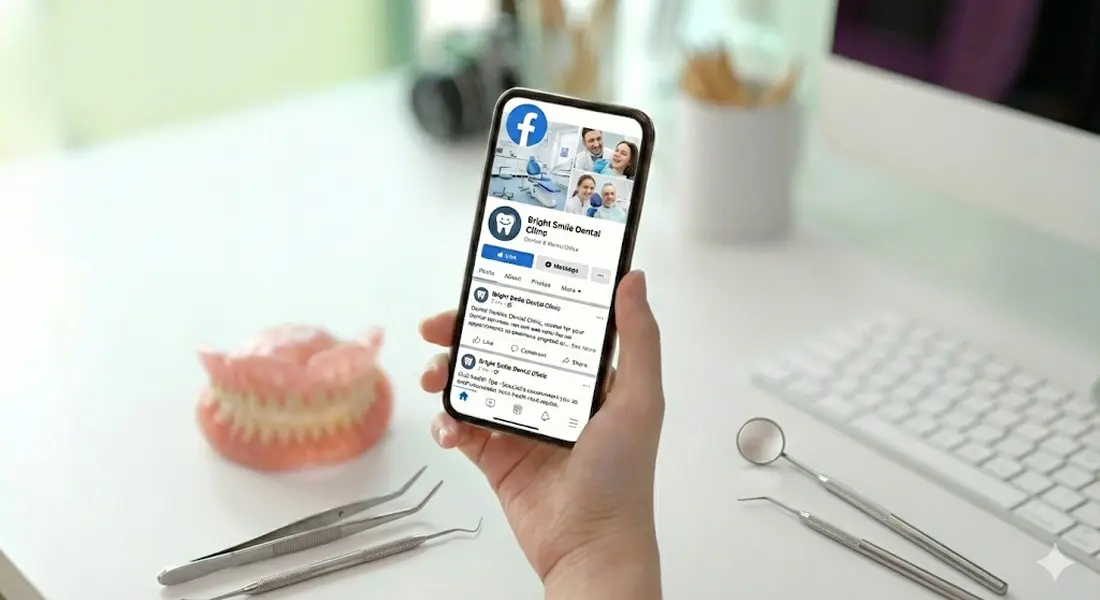
Facebook can be a valuable lead-generation channel for your dental clinic — but only when it’s used with a clear strategy. If you’ve posted regularly, boosted updates, or tried running ads and felt the results didn’t justify the effort or spend, the issue is rarely Facebook itself. More often, it’s that the platform isn’t being used in a way that reflects how patients actually choose a dentist.
For your clinic, Facebook should not be about chasing likes or keeping up with trends. It should help you generate qualified leads by building trust, explaining your treatments clearly, and reinforcing why a patient should choose you over other options. When your content and ads are aligned with this decision-making process, Facebook becomes a supporting channel that feeds into enquiries and consultations rather than a distraction.
In this guide, you’ll learn how to use Facebook marketing in a practical, structured way that fits around running a busy dental practice. We break down what to post, how often to post, when paid ads make sense, and where clinics typically waste time and budget. The focus throughout is on helping you generate better-quality leads and use Facebook as part of a wider digital strategy, rather than treating it as a standalone solution.
How Patients Use Facebook When Exploring Dental Clinics
When a potential patient comes across your dental clinic on Facebook, they are rarely starting their search from scratch. In most cases, Facebook sits partway through the decision-making journey, not at the very beginning. Understanding this matters, because it changes how you should approach content, ads, and expectations.
Patients typically arrive on Facebook in one of two states. Either they already know they need dental treatment and are quietly assessing which clinic feels right, or they have a latent interest that is triggered by something they see in their feed. In both situations, Facebook influences choice by helping patients explore you as a clinic, rather than helping them decide whether they need treatment at all.
This is why Facebook works best as a reassurance and exploration platform for dentistry. Patients use it to get a sense of who they would be treated by, how clearly treatments are explained, and whether the clinic feels professional and trustworthy. They are not looking for technical detail or pricing breakdowns in this moment. They are forming a gut-level judgement about whether they feel comfortable taking the next step.
What Changes When a Patient Sees a Facebook Ad
When a patient sees your dental clinic’s Facebook ad, they can book a consultation immediately — and many do, particularly when the offer is clear and the next step feels low risk. Facebook ads are designed to capture leads, and a strong call to action such as booking a free consultation plays an important role in making that happen.
However, how quickly a patient books often depends on whether they are seeing your clinic for the first time or have already interacted with you elsewhere. This is where retargeting becomes important. Patients who have previously visited your website, engaged with your content, or watched your videos are far more likely to book immediately when they see a Facebook ad, because a level of familiarity and trust already exists.
For this reason, effective Facebook advertising for dentists usually combines lead-capture ads with retargeting campaigns. Retargeting ads allow you to re-engage patients who have already shown interest and give them a clear opportunity to book a consultation at the point they feel ready. In these cases, strong booking calls to action are not only appropriate but often perform best.
This also explains why Facebook’s impact is sometimes underestimated. A patient may first engage with an ad, then return days or weeks later via Google or direct search to complete the booking. Facebook has still done its job by capturing intent and reinforcing the decision, even if the final conversion happens through another channel.
Why This Understanding Matters for Lead Generation

If you treat Facebook as a direct response platform and expect instant, high-intent leads, it will often feel disappointing. If you treat it as a structured way to support exploration, build familiarity, and reinforce trust, it becomes a reliable contributor to lead generation over time.
Once this role is clear, decisions around content, ad formats, and budgets become much easier. Instead of asking why posts or ads are not producing immediate bookings, the focus shifts to whether your Facebook presence is helping patients feel informed, reassured, and confident enough to enquire when they are ready.
In the next section, we’ll look at the specific types of Facebook content that work best for dental clinics — and how to structure your posts so they actively support this exploration and lead-generation process.
Step-by-Step: How to Set Up Facebook Properly for a Dental Clinic
Before you run ads or even start posting consistently, you need your Facebook setup to be correct. If it isn’t, you’ll end up with messy tracking, poor lead attribution, and avoidable issues such as the wrong account owning the page, unclear admin access, or ads running without proper measurement. A clean setup takes a little time upfront, but it’s what makes Facebook marketing predictable and scalable.
Step 1: Make Sure You Have the Right Assets (Page + Business Portfolio)
You need:
- A Facebook Page for your dental clinic (not a personal profile)
- A Business Portfolio in Meta Business Suite (this is what owns assets and controls access)
If your Page is tied to a staff member’s personal Facebook account with no proper business setup, you create a risk. People leave, access gets lost, and you end up locked out later. Your clinic should always have at least two admin-level users who can access everything.
Step 2: Set Up Correct Admin Access (So You Don’t Lose Control)
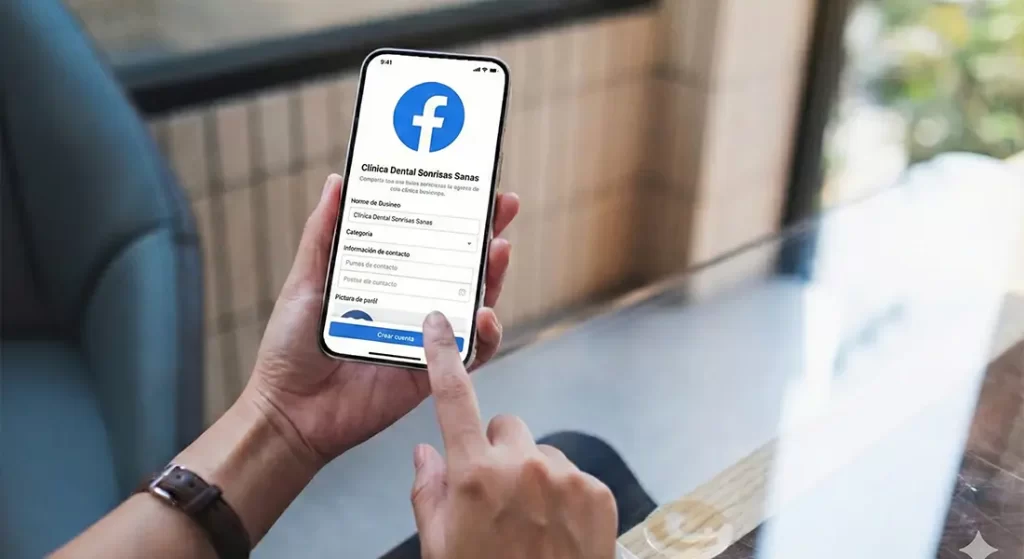
For a dental clinic, you should have:
- Two Admins minimum (eg practice owner + senior manager)
- Any agency or contractor added as a partner or with appropriate role access (not as the only admin)
This prevents the common scenario where an old staff member’s Facebook account effectively “owns” the business assets and you can’t make changes later.
Step 3: Confirm Your Business Details Are Consistent Everywhere
Patients cross-check quickly. Make sure your Facebook Page has:
- the exact clinic name you use on your website and Google Business Profile
- correct address, phone number, and opening times
- your website URL and booking link
- a short, clear clinic description that matches your positioning (eg Invisalign / implants / general dentistry)
Consistency here improves trust, and it also helps Facebook understand what you do (which affects ad performance).
Step 4: Install and Verify Tracking (If You Want Measurable Results)
If you plan to run ads seriously, you need tracking in place. At minimum, set up:
- Meta Pixel on your website
- Conversion tracking for key actions (eg booking form submission, thank-you page view, click-to-call)
Without this, you can still run lead forms inside Facebook, but you’ll struggle to measure what happens when people leave Facebook and book via your site.
Step 5: Create Your Core Audiences (So You Can Retarget Properly)
Retargeting is where most dental clinics see their best Facebook performance, but you only get this advantage if audiences are set up properly. Create audiences for:
- website visitors (30 / 90 / 180 days)
- people who engaged with your Facebook and Instagram pages
- video viewers (eg 25% viewers of dentist-led videos)
These become your highest-value audiences for consultation booking campaigns.
Step 6: Add a Reliable Lead Handling Process (So Leads Don’t Go Cold)
Facebook leads are time-sensitive. If your clinic takes too long to respond, conversion rates drop quickly. Before you start campaigns, decide:
- who receives lead notifications
- how quickly you will contact new leads
- how you will follow up if they don’t respond first time
A simple, consistent follow-up process often makes a bigger difference than tweaking ad targeting.
Quick Checklist: Your Setup Is “Ready” When…
- You have a clinic Page and Business Portfolio set up correctly
- At least two trusted people have admin access
- Your clinic details match your website + Google profile
- Tracking is in place (Pixel + conversions if using website bookings)
- Retargeting audiences are created
- Your team can respond to leads quickly and consistently
Choosing the Right Facebook Page Name, Username, and Bio for Your Dental Clinic
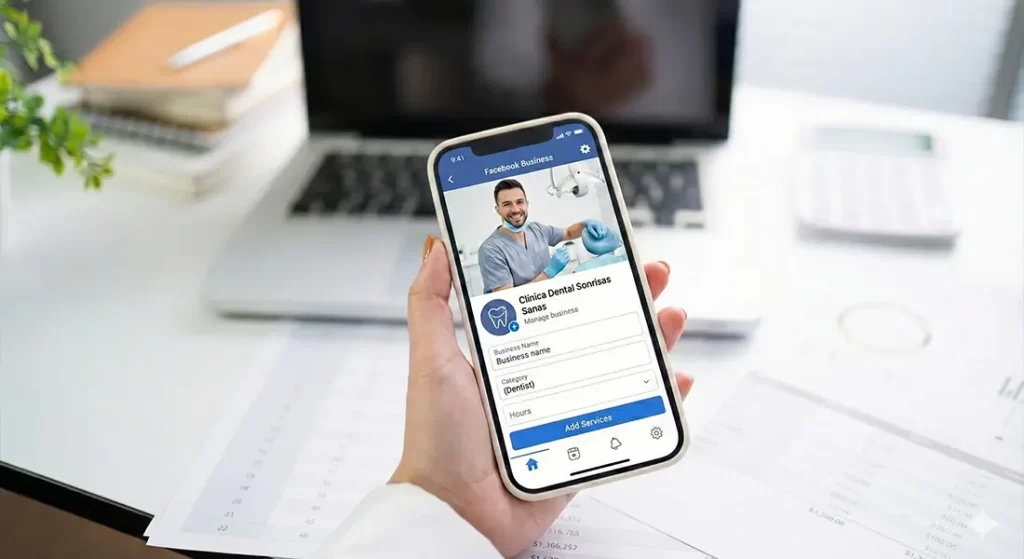
Before patients click an ad, send a message, or book a consultation, they usually glance at your Facebook Page. In seconds, they decide whether your clinic looks legitimate, professional, and worth engaging with. Your Page name, username, and bio play a much bigger role in this decision than most clinics realise.
Your Facebook Page Name: Keep It Clear and Familiar
Your Page name should match how patients already know you.
Best practice:
- Use your official clinic name exactly as it appears on your website and Google Business Profile
- Avoid adding extra keywords, locations, or marketing phrases
- Do not change the name frequently — this reduces trust and can cause confusion
Example:
- Good: “Smith Dental Clinic”
- Poor: “Best Dentist London | Invisalign & Implants”
Patients are not impressed by keyword stuffing. They are reassured by consistency.
Your Facebook Username (@handle): Make It Easy to Find and Recognise
Your username is what appears in your Page URL and is often visible on ads.
Aim for:
- the clinic name without unnecessary characters
- no numbers unless unavoidable
- the same handle you use on Instagram where possible
Examples:
- @smithdentalclinic
- @smithdental
Avoid:
- long, complex usernames
- abbreviations patients won’t recognise
- multiple location references unless you genuinely operate multiple clinics
A clean username improves trust and makes it easier for patients to find you again after seeing an ad.
Your Facebook Bio: What Patients Should Understand in 5 Seconds
Your bio should not try to explain everything you do. Its job is to quickly reassure.
A strong dental Facebook bio answers three questions:
- What type of clinic are you?
- Who do you help?
- What should a patient do next?
Simple structure:
- one line describing your clinic focus
- one line reinforcing professionalism or experience
- one line telling patients how to book
Example:
Private dental clinic offering Invisalign, implants, and cosmetic dentistry.
Experienced clinicians focused on clear communication and patient care.
Book a consultation via our website.
This is enough. Overwriting here often hurts clarity.
Profile Photo and Cover Image: Don’t Overthink It

Your profile photo should be:
- your clinic logo (clear, high resolution)
- recognisable at small sizes
Your cover image should:
- reinforce professionalism
- avoid clutter
- ideally feature the clinic or dentist rather than stock imagery
These visuals don’t need to be clever — they need to look credible.
Why This Matters for Ads and Lead Generation
When someone clicks a Facebook ad, they often check the Page before booking. If your name, username, or bio feels inconsistent or unclear, confidence drops instantly — even if the ad itself is strong.
A clean, professional Page setup:
- increases ad conversion rates
- improves lead quality
- reduces hesitation before booking
This is not cosmetic work. It directly affects outcomes.
Quick Page Optimisation Checklist

Before running ads, check:
- Page name matches your website and Google profile
- Username is short, recognisable, and consistent
- Bio clearly explains who you are and what to do next
- Profile and cover images look professional
Optimising Your Facebook Bio, Reviews, and Testimonials to Increase Conversions

Before a patient books a consultation or submits a lead form, many will quickly sanity-check your Facebook Page. This usually takes seconds. Your bio, reviews, and testimonials either reinforce confidence — or quietly kill it. This is not a branding exercise; it directly affects lead quality and conversion rates.
Writing a Facebook Bio That Supports Bookings
Your Facebook bio should not try to list every service you offer. Its role is to confirm legitimacy, clarify focus, and direct action.
A strong dental Facebook bio should:
- clearly state what type of clinic you are
- highlight your main treatment focus
- explain how patients can take the next step
Simple structure that works well:
- Line 1: who you are and what you do
- Line 2: reassurance (experience, approach, or specialism)
- Line 3: clear next step
Example:
Private dental clinic providing Invisalign, dental implants, and cosmetic dentistry.
Experienced clinicians focused on clear communication and patient care.
Book a consultation via our website.
Avoid vague marketing language, exaggerated claims, or overly long descriptions. Clarity converts better than creativity.
Using Testimonials and Reviews on Facebook Properly
Patients trust other patients. Facebook reviews and testimonials play a supporting role alongside Google reviews, especially when someone has arrived via an ad.
Best practice:
- enable Facebook reviews on your Page
- ensure recent reviews are visible
- avoid hiding reviews unless there is a genuine reason
When a patient clicks through from an ad, seeing recent, credible feedback helps justify the booking decision they’re about to make.
How to Share Testimonials Without Looking Promotional

Testimonials work best on Facebook when they feel natural and contextual rather than sales-driven.
Effective formats include:
- short patient quotes paired with an image of the clinic
- brief video testimonials (even filmed on a phone)
- screenshots of written feedback with identifying details removed
Always ensure you have consent and avoid exaggerated claims. The goal is reassurance, not persuasion.
Why Social Proof Matters for Lead Quality
Strong social proof doesn’t just increase the number of leads — it improves who enquires.
Clinics with visible, consistent testimonials tend to receive:
- fewer price-only enquiries
- more informed patients
- higher consultation attendance rates
This reduces wasted admin time and improves overall return on ad spend.
The Main Types of Facebook Ads Dentists Can Use (And What Each Is For)
Facebook offers multiple ad formats, but most dental clinics only need to focus on a small number of them. The mistake many practices make is jumping straight into running ads without understanding the role each format plays in lead generation and bookings.
At a high level, Facebook ads for dentists fall into four core categories, each serving a different purpose within your marketing funnel.
1. Lead Generation Ads (Instant Forms)
Lead generation ads allow patients to submit their details or request a consultation without leaving Facebook. This reduces friction and makes it easier for patients to enquire, particularly when they are still weighing up their options.
These ads are best suited to:
- capturing enquiries quickly
- promoting high-consideration treatments such as Invisalign or dental implants
- lowering the barrier to first contact
Lead ads work best when the ad clearly explains who the treatment is for and what the consultation involves. Poorly explained lead ads tend to generate volume without quality.
2. Website Conversion Ads (Booking or Enquiry Pages)
Website conversion ads send patients to your website to book or request a consultation. These ads tend to attract higher-intent enquiries, but they rely heavily on the strength of your website.
They are best suited to:
- clinics with clear service pages and booking journeys
- patients who are closer to making a decision
- practices that already explain their consultation process well
If your website is unclear or difficult to navigate, these ads will underperform regardless of budget.
3. Retargeting Ads (Warm Audiences)

Retargeting ads are shown to people who have already interacted with your clinic, such as website visitors, page engagers, or video viewers. These audiences are more familiar with your clinic and therefore more likely to book.
Retargeting ads are best used to:
- convert existing interest into bookings
- reinforce trust and confidence
- prompt action from patients who were already considering treatment
Even with lower lead volume, retargeting campaigns often deliver the highest-quality enquiries.
4. Video Ads (Trust and Familiarity Building)
Video ads, particularly those featuring the dentist, play an important supporting role across Facebook campaigns. They help patients understand who they would be treated by and reduce uncertainty before booking.
These ads are best used to:
- introduce the dentist and clinic
- explain treatments in plain language
- support both cold and retargeting campaigns
Video ads rarely work in isolation but significantly improve the performance of lead and conversion campaigns when used alongside them.
Which Facebook Ads to Run First (And In What Order) for Dental Clinics
For most dental clinics, Facebook advertising works best when ads are sequenced, not launched all at once. The aim is to capture leads early while increasing confidence with follow-up, rather than relying on a single ad to do everything.
The structure below reflects how patients actually respond to ads — even when they’ve never heard of your clinic before.
Step 1: Video Lead-Capture Ad (First Touch)
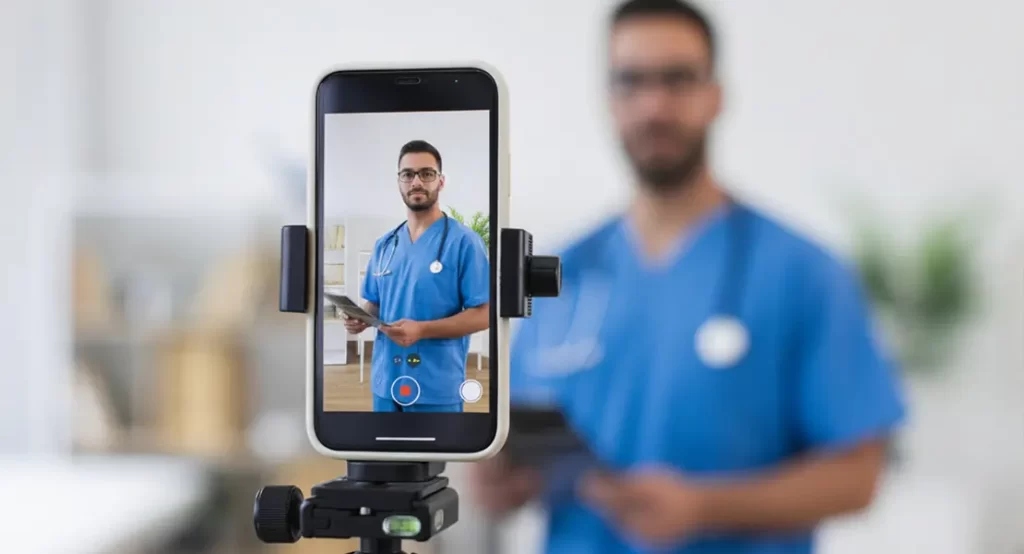
This should be your starting point.
A short video featuring the dentist, combined with a lead-generation objective, allows you to:
- introduce the clinic
- explain the treatment briefly
- reassure the patient
- capture an enquiry immediately
This works because the video builds confidence quickly, while the lead form keeps friction low.
Why this comes first
- patients don’t need prior awareness
- trust is established quickly
- booking feels justified rather than forced
CTA examples
- “Book a free consultation”
- “Request an Invisalign assessment”
Step 2: Retargeting Lead-Capture Ad (Reinforcement)
Not everyone will book on first exposure. This is expected.
Your second layer should retarget people who:
- watched the video
- clicked the ad
- visited your website
This ad reinforces the message and repeats the booking CTA.
Why this works
- familiarity reduces hesitation
- patients often need more than one touch
- lead quality improves on the second exposure
Step 3: Retargeting Website Booking Ad (Higher Intent)
For patients who have already:
- engaged with your ads
- visited your site
- shown stronger intent
a website booking ad can work very well.
At this point, the patient is more comfortable navigating your site and committing via a booking page.
Why this comes later
- website bookings are higher friction
- they convert best once confidence exists
Step 4: Supporting Video or Testimonial Ads (Optional, but Powerful)
Alongside the above, you can run:
- short testimonial videos
- dentist-led explanation clips
- patient journey content
These don’t replace lead capture — they support it by increasing conversion rates across all campaigns.
Why This Order Works
This sequence:
- captures leads from first exposure
- improves conversion through repetition
- avoids relying on brand recognition
- supports strong booking CTAs throughout
It accepts that:
- some patients book immediately
- others need a second or third touch
- both behaviours are normal
What to Avoid
- launching all ad types at once
- starting with website-only booking ads
- expecting cold traffic to behave like Google searches
The Core Principle
Capture leads early, reinforce confidence, then increase commitment.
That’s the order.
How to Allocate Budget Across Facebook Ads (Without Losing Lead Quality)

Once your ads are structured in the right order, budget allocation becomes far more predictable. Most problems clinics experience with Facebook advertising are not caused by spending too little or too much, but by spreading budget incorrectly across campaigns.
For dental clinics, the goal is not to maximise lead volume at the lowest possible cost, but to generate enquiries that turn into booked consultations and treatments.
Start With a Simple Budget Split
For most clinics, a sensible starting point is:
- 50–60% on first-touch video lead-capture ads
- 25–30% on retargeting lead-capture ads
- 10–20% on retargeting website booking ads
This ensures you are capturing new leads while consistently following up with patients who need more than one interaction before booking.
Why First-Touch Ads Deserve the Largest Share
Your first-touch ads are doing the heaviest work. They are:
- introducing your clinic
- explaining the treatment
- capturing initial intent
If these ads are underfunded, retargeting audiences never grow and performance stalls. This is why clinics that over-invest in retargeting too early often see campaigns plateau.
How to Adjust Budget Based on Lead Quality
Once campaigns are live, budget should be adjusted based on what happens after the lead is captured, not just cost per lead.
Signals to watch:
- response rate when contacting leads
- consultation attendance
- suitability for treatment
If lead volume is high but attendance is low, budget should be shifted toward retargeting or video-led ads that build more confidence before booking.
Avoid Constant Micro-Changes
Facebook needs time to learn. Constantly changing budgets or switching ads on and off makes performance unpredictable.
Best practice:
- run each setup for at least 10–14 days
- make one change at a time
- judge performance on outcomes, not daily fluctuations
Budget Expectations for Dental Clinics
While budgets vary, many clinics see consistent results starting from:
- £15–£30 per day for first-touch campaigns
- £5–£15 per day for retargeting layers
Scaling should only happen once lead quality and consultation outcomes are stable.
The Core Rule
Scale what converts into patients, not what looks good inside Ads Manager.
This mindset protects your budget and keeps Facebook working as a reliable lead-generation channel.
Common Facebook Ad Mistakes Dentists Make (And How to Avoid Them)

Facebook advertising for dental clinics rarely fails randomly. When campaigns underperform, the cause is almost always structural rather than technical. Clinics either rush into ads without the right foundations, expect Facebook to behave like Google, or optimise for the wrong outcomes. Understanding these mistakes in detail is the fastest way to improve results without increasing spend.
Treating Facebook Ads as an Experiment Rather Than a System
One of the most common mistakes dentists make is running Facebook ads on an ad-hoc basis. Campaigns are launched “to test”, paused after a few days, then restarted weeks later with different messaging. This creates inconsistent results and makes it impossible to understand what is actually working.
Facebook advertising performs best when it is treated as a system, not a one-off activity. That system includes lead capture, follow-up, retargeting, and optimisation over time. Without consistency, Facebook’s algorithm never has enough data to stabilise, and clinics end up making decisions based on incomplete information.
To avoid this, campaigns should be planned with a minimum run time in mind and judged on outcomes over weeks, not days. Consistency almost always outperforms constant tinkering.
Expecting Facebook to Deliver the Same Intent as Google Ads
Another major mistake is expecting Facebook ads to produce the same type of patient as Google search ads. Google captures people actively searching for a dentist or treatment. Facebook reaches people who are not searching, but may still be interested if the message resonates.
When clinics expect Facebook traffic to behave like search traffic, they often push overly aggressive booking messages too early. This can generate enquiries, but they tend to be lower quality and harder to convert. The issue is not the platform, but the mismatch between patient mindset and messaging.
Facebook works best when ads create momentum and confidence, even when the call to action is strong. Clinics that understand this difference see far more consistent lead quality.
Launching Ads Without a Clear Follow-Up Process
Many clinics focus heavily on generating leads, but give little thought to what happens after a lead comes in. Facebook leads are time-sensitive. If there is no clear process for contacting new enquiries quickly, conversion rates drop sharply.
A weak follow-up process often leads clinics to assume the ads are poor, when in reality the issue is internal. Delayed responses, unclear scripts, or inconsistent follow-up all reduce the chance of a booking.
Before running ads, clinics should know exactly who will contact leads, how quickly, and what will be said. In many cases, improving follow-up has a bigger impact on results than changing ad copy or targeting.
Promoting Too Many Treatments in One Campaign
Trying to advertise multiple treatments at once is another frequent mistake. When ads mention Invisalign, implants, cosmetic bonding, and general dentistry together, patients struggle to understand what the ad is actually about.
Effective Facebook ads are focused. They promote one treatment, speak to one type of patient, and lead to one clear next step. This clarity improves relevance, reduces confusion, and increases the likelihood that enquiries are suitable.
Clinics that simplify their campaigns often see fewer leads initially, but a noticeable improvement in booking and treatment conversion.
Ignoring Retargeting or Treating It as Optional
Retargeting is one of Facebook’s strongest features, yet many clinics either ignore it or set it up too late. Patients rarely book after a single interaction. Retargeting allows clinics to follow up with people who have already shown interest and give them a second or third opportunity to enquire.
When retargeting is missing, clinics rely entirely on first-touch ads to do all the work. This puts unnecessary pressure on a single interaction and leads to inconsistent performance.
Retargeting should be considered a core part of Facebook advertising, not an optional extra. It improves lead quality, reduces hesitation, and increases overall return on ad spend.
Optimising for Cheap Leads Instead of Real Outcomes
A low cost per lead can be misleading. Clinics often celebrate cheap leads without checking whether those leads attend consultations or proceed with treatment. In practice, the cheapest leads are often the least committed.
True success should be measured by:
- consultation attendance
- suitability for treatment
- conversion into paying patients
When clinics optimise for these outcomes instead of headline metrics, their Facebook campaigns become far more predictable and sustainable.
Making Constant Changes Based on Short-Term Results

Frequent changes to ads, audiences, or budgets can seriously harm performance. Facebook’s algorithm needs time to learn who is responding to your ads. Constant adjustments reset this learning process and create unstable results.
This often leads to a cycle of frustration where nothing is allowed to run long enough to succeed. Clinics then conclude that Facebook “doesn’t work”, when in reality it was never given a fair chance.
A better approach is to make measured changes at planned intervals, based on meaningful data rather than daily fluctuations.
The Bigger Picture
Most Facebook ad problems in dentistry are not caused by poor targeting or creative alone. They stem from unclear structure, unrealistic expectations, and weak processes around lead handling and optimisation.
Clinics that treat Facebook advertising as a structured, ongoing system — rather than a series of isolated tests — consistently see better lead quality, higher booking rates, and more reliable growth.
Facebook Marketing for Dentists: Frequently Asked Questions
1. Does Facebook marketing actually work for dentists?
Yes, Facebook marketing can work very well for dentists, but it works differently from Google Ads. Facebook is not primarily about capturing patients who are actively searching at that moment. Instead, it captures interest, builds confidence, and generates enquiries when the message and offer are clear. Clinics that use Facebook with proper structure and lead capture often see consistent consultation enquiries.
2. Can Facebook ads generate consultation bookings directly?
Yes. Many patients will book a consultation directly after seeing a Facebook ad, particularly when the call to action is clear and the next step feels low risk. Others may check your website, reviews, or Google profile first before booking. This does not mean the ad failed — it simply played an earlier role in the decision-making process.
3. Should Facebook ads always push a strong call to action?
Facebook ads should always include a clear call to action when the goal is lead generation. Strong calls to action work best when the ad explains who the treatment is for and what the consultation involves, rather than relying on urgency alone.
4. Is it better to use Facebook lead forms or send patients to the website?
Both approaches can work. Facebook lead forms reduce friction and often perform better when patients are seeing your clinic for the first time. Website booking ads tend to work best once confidence is higher and the booking journey is clear. Many clinics use a combination of both.
5. Do video ads really matter for dental clinics?
Video ads are not mandatory, but they are highly effective for dentistry. Seeing and hearing the dentist helps patients feel reassured more quickly, especially when they have never heard of the clinic before. Video performs particularly well when used to explain treatments and support lead capture.
6. Can you combine video ads with lead generation?
Yes. Video lead-capture ads are one of the strongest formats available for dental clinics. The video builds trust and explains the treatment, while the lead form allows patients to enquire without leaving Facebook.
7. How many Facebook ads should a dental clinic run at once?
Most clinics perform best when they start with a small number of well-structured ads rather than many campaigns at once. One primary lead-capture ad supported by retargeting is usually enough to generate meaningful data early on.
8. Why do some Facebook leads not respond or attend consultations?
This is usually caused by unclear messaging or slow follow-up rather than Facebook itself. If patients do not fully understand what the consultation involves, or if they are contacted too late, attendance rates drop significantly.
9. How long does it take for Facebook ads to start working?
Facebook ads rarely deliver perfect results immediately. Most clinics need a few weeks of consistent activity before performance stabilises. Judging campaigns too quickly often leads to poor decisions.
10. Should Facebook replace Google Ads or other marketing channels?
No. Facebook works best alongside other channels. Google captures active demand, while Facebook supports consideration and enquiry generation earlier in the patient journey.
11. Is Facebook suitable for all dental treatments?
Facebook works particularly well for high-consideration treatments such as Invisalign, dental implants, cosmetic dentistry, and smile makeovers. It is generally less effective for urgent or emergency dentistry.
12. What is the biggest mistake dentists make with Facebook ads?
The biggest mistake is treating Facebook ads as isolated experiments rather than part of a structured system. Clinics that lack clear setup, consistent messaging, and a defined follow-up process often conclude that Facebook doesn’t work, when in reality it was never used correctly.
Final Thoughts

Facebook marketing can be a highly effective way for dental clinics to generate leads, but only when it is approached with structure and intent. Clinics that treat Facebook as a place to post occasionally or run disconnected ads often see inconsistent results and conclude that the platform doesn’t work for dentistry. In reality, it’s usually the lack of clarity and process — not Facebook itself — that causes problems.
When your Page is set up properly, your ads are structured in the right order, and your messaging clearly explains who the treatment is for and what happens next, Facebook becomes far more predictable. It allows you to introduce your clinic, build confidence quickly, and capture enquiries even from patients who have never heard of you before.
At Clinic Engine, we work with dental clinics and other healthcare businesses to improve how their marketing performs in the real world. As a dental marketing agency, we focus on applying battle-tested strategies that are proven to boost patient bookings, not just generate clicks or enquiries. We see time and again that results improve once Facebook is treated as a structured lead-generation system rather than a series of disconnected experiments.
The clinics that get the most value from Facebook are consistent, clear, and patient in their approach. They understand that not every patient will book immediately, but that each interaction plays a role in the decision-making process. When Facebook is integrated properly alongside other channels and supported by strong follow-up, it becomes a dependable source of patient enquiries rather than a source of frustration.
If you want Facebook to work reliably for your clinic, the difference is rarely the platform itself — it’s how it’s set up, structured, and managed over time. That’s where experience, clarity, and battle-tested marketing strategies make all the difference.