
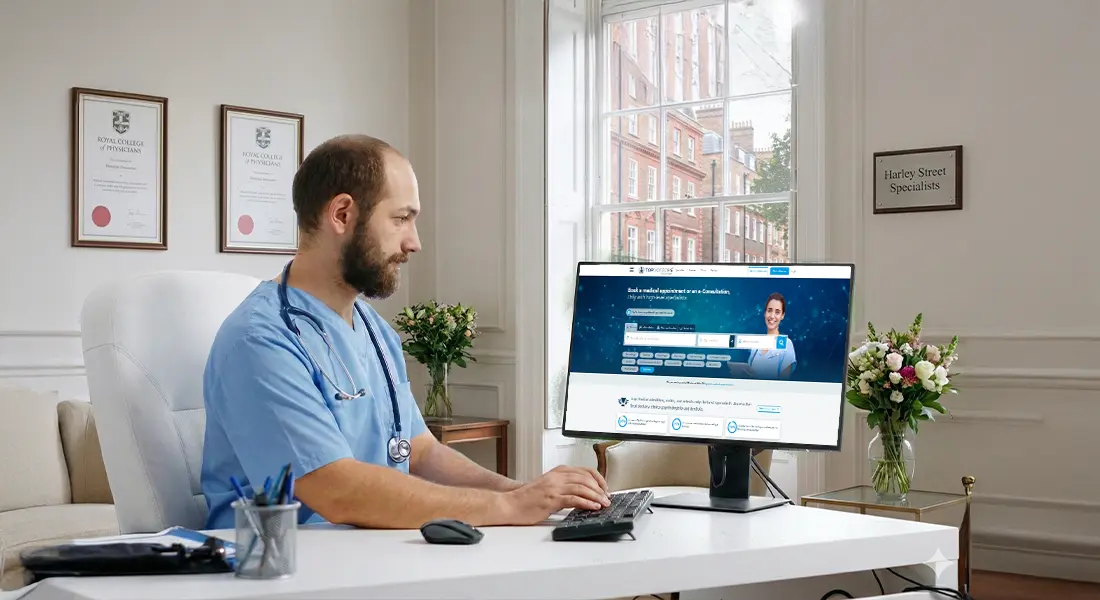
If you’re considering Top Doctors — or you’re already listed — the key question is straightforward: will it meaningfully contribute to bookings, or does it function mainly as a branding and credibility tool?
In practice, its impact depends far less on the platform itself and far more on how you use it. Top Doctors tends to influence patients later in their decision-making process, once they are already aware of you and are looking for external reassurance. At that stage, your profile can either reinforce confidence and prompt a consultation, or introduce doubt and push the patient back into comparison mode.
Because of this, Top Doctors works best when it is positioned deliberately and aligned with your wider marketing and patient journey. It should support enquiries that originate elsewhere, strengthen trust at key decision points, and sit alongside your website, reviews, and referrals as part of a broader credibility framework, rather than being treated as a standalone lead source.
Get Your Top Doctors Profile Right From Day One
Step 1: Select the Correct Specialty and Categories
Choose the specialty that reflects how patients search for you, not just your formal registration.
If cosmetic surgery is the core of your private practice, this should be your primary category. Avoid selecting broad or loosely related specialties that dilute relevance.
Only select sub-specialties and procedures you actively want enquiries for. Do not tick every option available. Over-selection makes your profile harder to understand and weakens positioning.
Step 2: Upload a Professional, Neutral Profile Photo

Use a clean, professional headshot with a neutral background and natural lighting. Professional attire is essential.
Avoid casual photos, operating theatre selfies, lifestyle images, or heavily stylised branding photography. Patients use this image to make an immediate judgement about professionalism and credibility.
Step 3: Complete All Profile Fields Fully and Accurately
You should treat every mandatory field on your Top Doctors profile as a trust checkpoint. Patients may not consciously analyse each section in isolation, but they do notice when information feels incomplete, inconsistent, or unclear.
Leaving sections unfinished or vaguely filled creates silent friction. A patient might not be able to articulate what feels wrong, but uncertainty at this stage is often enough to delay booking or push them back into comparison mode.
Qualifications and training should be listed clearly and in a logical order, with relevance in mind. Patients are not medical professionals, so avoid assuming they understand acronyms or institutional significance without explanation.
For example, listing:
“MBBS, MRCS, FRCS”
without context forces the patient to interpret what those qualifications mean. A clearer and more reassuring approach would be:
“MBBS, MRCS, FRCS (Plast), with specialist training in cosmetic and reconstructive surgery”
This version explains relevance and reinforces expertise without overwhelming the reader.
Current practice location(s) must reflect where you actively see patients today, not historical posts or occasional clinics. Patients frequently cross-check addresses, particularly if they are travelling or comparing multiple surgeons.
For instance, if your website states that you practise at a specific London clinic, but your Top Doctors profile lists several locations you no longer use, it can create confusion about where you are actually based. Similarly, if your website lists one flagship location but your Top Doctors profile shows a different address, patients may hesitate before booking, even if everything else looks strong.
Years of experience should be stated consistently across all platforms. Avoid rounding up, approximating, or presenting the same information differently on different sites.
As an example, if your website refers to “over 15 years’ experience” but your Top Doctors profile suggests a different career timeline, most patients won’t calculate the discrepancy precisely. However, inconsistency erodes confidence, particularly in cosmetic surgery where trust is cumulative and detail matters.
Languages spoken should only include languages in which you can confidently conduct a full consultation. This section directly influences whether some patients book at all.
For example, listing a language because you have basic conversational ability can backfire if a patient books specifically for that reason and then struggles to communicate during consultation. This often results in a poor patient experience and a wasted appointment for both sides.
Before publishing your profile, you should cross-check every field against your website, Google Business Profile, and any other major directories you appear on. The goal is simple: wherever a patient looks, they should see the same information presented in the same way. Consistency reduces doubt, and reduced doubt makes booking the easier decision.
How Top Doctors Verification and Approval Works

Top Doctors is a curated platform, which means your profile is reviewed and verified before it becomes fully active. This verification process is part of what gives the platform credibility in the eyes of patients, but it can also cause delays or limitations if not handled properly.
During setup, you are typically asked to provide evidence of your professional status, such as medical registration details, specialist credentials, and confirmation of your current practice. The platform checks that this information is accurate, current, and consistent with publicly available records.
Incomplete profiles are one of the most common causes of delayed approval. Missing qualifications, unclear practice locations, or vague role descriptions can slow the process or result in follow-up requests. For this reason, it is important to complete all required fields carefully before submitting your profile for review.
Approval timelines can vary, but most profiles are reviewed within a few weeks once all information is provided correctly. If discrepancies are identified, approval may be delayed until they are resolved. This is another reason consistency with your website and other professional listings matters.
Verification is not a one-time event. If your practice location changes, your clinical focus evolves, or your professional details are updated elsewhere online, your Top Doctors profile should be updated as well. Maintaining accuracy over time helps preserve credibility and avoids issues with visibility or trust.
Treating verification as part of ongoing profile maintenance, rather than a one-off hurdle, ensures your listing continues to support your professional positioning and patient confidence.
Step 4: Write a Bio That Encourages Bookings
Your Top Doctors bio is not a CV and it is not a personal statement. It is a decision-support tool for patients who are deciding whether to book a consultation with you or continue comparing surgeons.
Most patients will skim this section rather than read it word for word, so structure and clarity matter more than length. Your bio should make it easy for the right patients to recognise that you are relevant to them.
Start With Your Primary Clinical Focus
Open your bio by stating clearly what you are known for and what type of work you primarily do. This should align exactly with the procedures you want enquiries for and how you position yourself on your website.
Patients should understand within the first sentence whether you are relevant to what they are looking for. Broad or generic openings force patients to read further just to establish basic relevance and often result in them moving on.
Avoid openings such as:
- “I am a fully qualified consultant surgeon with extensive experience”
- “I offer a wide range of cosmetic and reconstructive procedures”
Instead, be specific about your focus, for example:
“I am a consultant cosmetic surgeon specialising in facial aesthetic surgery, including rhinoplasty and facial rejuvenation procedures.”
Present Experience in Patient-Relevant Terms
After establishing your focus, describe your experience in a way that reassures patients rather than listing every credential.
Patients care less about where you trained and more about whether you regularly perform the procedure they are considering. Highlight experience that supports your stated focus and omit anything that distracts from it.
If you mention qualifications or training, explain their relevance briefly rather than listing acronyms without context.
Explain Your Consultation Approach
Patients want to know what it will feel like to see you, not just what you can do surgically.
Include a short section explaining how you approach consultations, how decisions are made, and how you involve patients in the process. This reduces anxiety and improves the likelihood of booking.
For example, mentioning that you focus on realistic outcomes, clear explanation, and individualised planning helps patients feel more comfortable before they ever contact your clinic.
Clarify Where and Who You Treat
State clearly where you practise and the type of patients you typically see. This helps patients self-select and improves enquiry quality.
If you mainly treat private cosmetic patients, say so. If you specialise in complex cases or revisions, make that clear. Specificity builds confidence and filters out unsuitable enquiries.
Remove Anything That Dilutes Focus
Before finalising your bio, review it line by line and remove anything that does not support your positioning.
Delete generic phrases, excessive medical jargon, and references to procedures you do not actively promote. Every sentence should reinforce clarity, relevance, and trust.
When written well, your bio does not try to impress every reader. It reassures the right patients and makes booking feel like the logical next step.
Step 5: Choose Procedures Strategically (Not Exhaustively)

The procedures you select on your Top Doctors profile directly shape the type of enquiries you receive. This section is not about transparency or completeness. It is about directing patient attention.
Many surgeons make the mistake of listing every procedure they are technically capable of performing. From a patient’s perspective, this often reads as a lack of focus rather than breadth of expertise.
Your goal is not to show everything you can do. Your goal is to make it immediately clear what you are best known for.
Start With the Procedures You Actively Want More Enquiries For
Begin by identifying the procedures you genuinely want to grow. These should usually be:
- Higher-value procedures
- Procedures you actively market on your website
- Procedures where trust and reassurance play a major role in decision-making
If a procedure is central to your practice and revenue, it should be visible and prioritised on your Top Doctors profile.
For example, if most of your private work comes from rhinoplasty, body contouring, or revision surgery, those procedures should appear clearly and prominently. If they are buried among a long list of minor treatments, patients may not recognise your focus.
Remove Procedures That Dilute Your Positioning
If you list too many procedures, patients struggle to understand what you specialise in.
For instance, a profile that lists facelift surgery, rhinoplasty, Botox, fillers, laser treatments, minor skin procedures, and reconstructive work all together sends a mixed message. Patients may assume you are a generalist rather than a specialist, even if that is not the case.
Ask yourself a simple question for each procedure you list:
“If a patient books this, is that an enquiry I actually want?”
If the answer is no, remove it.
Filtering is not a loss. It improves enquiry quality and conversion.
Match Procedure Names to Patient Language
Where possible, use procedure names that patients recognise rather than overly technical terminology.
Patients searching for information about tummy tuck surgery are more likely to respond to “abdominoplasty (tummy tuck)” than “abdominal contouring procedures”. Clear language reduces friction and improves understanding.
If the platform allows both technical and lay terms, include both. If not, prioritise clarity over formality.
Keep Your Procedure List Aligned With Your Website

Patients often move back and forth between your website and your Top Doctors profile. If your website promotes certain procedures heavily but your Top Doctors profile highlights different ones, patients may question whether they are looking at an up-to-date or accurate representation of your practice.
Before finalising your procedure list, cross-check it against:
- Your main procedure pages
- Your homepage positioning
- Your consultation focus
Consistency reassures patients and makes booking feel safer.
Review and Update Regularly
Your practice will evolve over time. New procedures may become central, while others may no longer be a focus.
You should review your Top Doctors procedure list at least once or twice a year. If a procedure is no longer something you actively promote or enjoy performing, remove it. If a procedure has become a core part of your work, ensure it is clearly visible.
A focused, well-maintained procedure list signals confidence and intent. A bloated, outdated one signals indecision.
Step 6: Guide Patients to Leave Reviews That Influence Bookings

Reviews are one of the most important factors influencing how effective your Top Doctors profile will be. They play a significant role in patient confidence, perceived credibility, and relevance at the decision stage. Because reviews do not appear automatically on the platform, it is essential to take a proactive approach from the outset.
In practice, we have found that WhatsApp messages sent to patients at the right point in their journey often generate higher response rates than email alone. Patients are more likely to see and respond to a short, well-timed message, particularly when it comes from the clinic team rather than a generic system.
Top Doctors does not provide an internal system for sending review requests. You cannot trigger automated emails, send manual invitations from within the platform, or run review campaigns in the way you can with platforms such as Trustpilot or Doctify. As a result, collecting reviews requires a deliberate, clinic-led process.
Accept That Review Requests Must Happen Outside the Platform
Because Top Doctors does not send review invitations on your behalf, all requests need to come directly from your clinic. This may be done via WhatsApp, email, or a brief follow-up conversation. Clinics that assume reviews will appear organically often end up with very few, regardless of how strong their reputation is.
Decide Which Patients to Ask
Not every patient is an appropriate candidate for a review request. You should focus on patients who have completed treatment and early recovery, have expressed satisfaction during follow-up, and felt informed and supported throughout the consultation process. Targeted requests consistently result in more relevant and thoughtful reviews.
Choose the Right Timing
Timing has a direct impact on both response rate and review quality. The most effective moment is usually after a follow-up appointment when the patient feels settled in their decision and can reflect on the overall experience. Requests made too early, particularly immediately after surgery, are more likely to be ignored or result in vague feedback.
Make the Request Simple and Neutral
Patients are more likely to leave a review when the request is clear and low-pressure. Explain that leaving a review is optional, tell them where to do it, and briefly mention that specific feedback helps other patients decide whether a surgeon is right for them. Avoid long explanations or repeated reminders.
Encourage Specificity Without Scripting
You should never tell patients what to write. However, you can explain what other patients find helpful. Letting patients know that reviews are most useful when they mention the procedure, who they saw, and how the consultation process felt often leads to more detailed and relevant feedback without influencing sentiment.
Example WhatsApp Review Request Message
Option 1 (friendly and natural):
“Hi [Patient Name], we hope you are well. If you’re happy with your experience so far, would you mind leaving a short review on Top Doctors? It’s completely optional, but it helps other patients if you mention the procedure and how the consultation felt. Thank you.”
Option 2 (shorter, WhatsApp-style):
“Hi [Patient Name], we hope you are well. If you’re happy to, could you leave a quick Top Doctors review? Totally optional, but mentioning the procedure and consultation experience is really helpful for others. Thank you.”
Follow Up Once, Then Stop
If a patient does not leave a review after the initial request, a single polite follow-up is reasonable. Repeated prompts are rarely effective and can feel uncomfortable for both the patient and the clinic. If a patient chooses not to leave a review, that decision should be respected.
Aim for Steady, Ongoing Collection
Because reviews on Top Doctors are not automated, they tend to accumulate slowly. This is normal. A small number of current, detailed reviews is far more effective than a large volume of generic ones. Steady collection over time keeps your profile credible and active without forcing the process.
Why Mentioning Your Name and the Procedure Matters
Reviews that include your name and the procedure performed are significantly more valuable than generic praise.
From a patient perspective, this immediately confirms relevance. A patient considering rhinoplasty will place far more weight on a review that explicitly mentions rhinoplasty and your name than on a general comment that could apply to anyone.
There is also a secondary benefit. Consistent mention of your name alongside your core procedures helps reinforce those associations across search engines and AI-driven platforms. While Top Doctors reviews are not a primary SEO ranking factor on their own, they contribute to your wider authority footprint and clarity around what you are known for.
The emphasis here is clarity, not optimisation. Patients should feel informed, not marketed to.
What to Avoid When Collecting Reviews

Avoid:
- Asking patients to use specific keywords
- Suggesting exact wording
- Encouraging promotional language about outcomes
- Pressuring hesitant patients to leave a review
Overly polished or repetitive reviews can look artificial and undermine trust. A smaller number of detailed, authentic reviews is far more effective than a large number of vague ones.
Responding to Reviews (If Available)
If the platform allows you to respond to reviews, keep responses brief, professional, and neutral.
Thank the patient for their feedback without revealing clinical details or becoming overly familiar. Remember that your response is written for future patients as much as for the reviewer. A calm, measured tone reinforces professionalism.
Maintain Consistency Over Time
Patients do not expect constant new reviews, but they do notice when the most recent review is several years old.
Aim for steady, periodic reviews rather than short bursts followed by long gaps. A profile that appears maintained and current signals an active, established practice and supports patient confidence.
Step 7: Integrate Your Top Doctors Profile and Widgets Into Your Website to Support Bookings

Your Top Doctors profile delivers value only when it is surfaced at the right moments in the patient journey. This includes both links to your profile and, where appropriate, Top Doctors widgets.
Used correctly, widgets act as reassurance tools. Used poorly, they distract patients away from booking.
Understand the Role of Top Doctors on Your Website
Top Doctors should function as an independent trust signal that supports decisions already being made on your site.
Patients typically look for external validation after they have read about you as a surgeon, reviewed a procedure page, looked at before-and-after images, or reached a consultation or booking page. At this point, they are not seeking more information. They are checking whether they feel comfortable proceeding.
Your integration strategy should reflect this behaviour.
Where Top Doctors Widgets Work Best
Top Doctors widgets are most effective when placed in decision-support areas rather than as primary calls to action.
On surgeon profile pages, a widget placed below your credentials or biography reinforces that your experience is independently recognised. At this stage, the patient is evaluating you as a clinician, so third-party validation is relevant.
On high-intent procedure pages, a widget can reassure patients that the surgeon performing the treatment is externally listed and established. This is particularly effective for higher-value or trust-sensitive procedures.
On consultation or booking pages, a widget placed near, but not above, the booking form can reduce last-minute hesitation. It should support the decision to book, not interrupt it.
Where Top Doctors Widgets Should Not Be Used
Widgets should not be placed at the very top of pages, above booking buttons, in homepage hero sections, or on low-intent blog content.
When widgets are placed too prominently, they can pull attention away from the primary call to action. If patients are leaving your site to browse Top Doctors instead of submitting a form, the placement is counterproductive.
How to Present Widgets Without Disrupting Conversion
Widgets should feel supportive and contextual rather than promotional.
They work best when visually secondary, understated, and paired with subtle explanatory text that signals independent recognition rather than invitation to browse.
Language that encourages patients to leave the site should be avoided. The purpose of the widget is reassurance, not redirection.
Linking to Your Full Top Doctors Profile
In addition to widgets, you should link to your full Top Doctors profile strategically.
Effective locations include surgeon biography pages, about pages, and high-intent procedure pages. These links should sit near content discussing your experience, specialism, or consultation approach so the transition feels logical.
Avoid limiting links to footers or generic trust sections, as patients rarely notice them there.
Maintain Consistency Across Platforms
Patients often move between your website and your Top Doctors profile more than once before booking.
Before adding widgets or links, ensure that your bio wording, listed procedures, clinic locations, titles, and credentials are consistent across platforms. Inconsistency undermines the trust the widget is meant to provide.
Monitor Behaviour and Adjust Placement
You should periodically review how Top Doctors is affecting patient behaviour.
Useful indicators include patients mentioning Top Doctors during consultation, higher confidence during first appointments, and improved conversion on pages where widgets are present.
If widgets appear to distract rather than reassure, reduce their prominence or move them lower on the page.
How to Monitor Whether Top Doctors Is Supporting Bookings
Top Doctors is not designed to function like paid advertising, but that does not mean you should ignore whether it is contributing to bookings. The aim is not perfect attribution, but understanding whether it is playing a meaningful supporting role in patient decision-making.
Start by asking every new patient how they found you or what helped them decide to book. Over time, clear patterns emerge. If patients regularly mention checking your Top Doctors profile before booking, it is influencing decisions. If it is rarely mentioned, that may indicate your profile is not visible enough, not well positioned, or not being surfaced at the right point in the journey.
You should also pay attention to how visitors behave once they reach your website from Top Doctors. If they spend time on surgeon profiles, procedure pages, or consultation forms, that suggests qualified interest. If they leave quickly, the issue is more likely to be your website messaging or conversion path rather than the platform itself.
Finally, look beyond direct enquiries. Top Doctors often does its work quietly by increasing confidence, reducing hesitation, and helping patients commit sooner. When reviewed periodically and adjusted based on real signals rather than assumptions, it can play a consistent supporting role in higher-quality bookings.
Using UTM Tracking and Top Doctors Analytics

You can use UTM parameters on the website link within your Top Doctors profile, and it is worth doing. This allows you to see how many visitors arrive on your site from Top Doctors and what they do once they get there, including which pages they view and whether they reach consultation or booking steps.
However, UTMs will never show the full picture. Many patients use Top Doctors as a reassurance step rather than a click-through channel. They may view your profile, leave the platform, and return later via search or by typing your website address directly. In those cases, Top Doctors has influenced the decision, but UTMs will not capture that path.
Top Doctors also provides basic platform-level analytics for paid listings. This typically includes profile views, search appearances, and relative visibility compared with similar practitioners in your area. These metrics are useful for understanding whether your profile is being surfaced and discovered, but they should be treated as directional indicators rather than performance benchmarks.
Used together, UTMs, platform analytics, and patient feedback provide a balanced view. They help you identify visibility issues, positioning gaps, or on-site conversion problems, without forcing Top Doctors into a role it was never designed to play.
Top Doctors Pricing: What It Typically Costs and What That Fee Covers

Top Doctors operates on a paid listing model, and pricing varies depending on specialty, location, and the type of profile selected. For cosmetic surgeons in the UK, annual costs typically fall within a broad but predictable range.
In most cases, cosmetic surgeons can expect pricing to start at around £2,000 to £3,000 per year, with more prominent or enhanced listings rising to £5,000 or more annually. Exact figures depend on factors such as geographic competition, specialty demand, and whether additional visibility features are included.
What you are paying for is not lead volume. The fee covers inclusion within a curated platform, profile hosting, association with other established consultants, and access to features such as reviews and widgets that can be used to reinforce credibility on your own website.
Because pricing is fixed rather than performance-based, value depends heavily on how the profile is used. A minimally completed profile with no integration or review strategy will struggle to justify even the lower end of the range. A well-positioned profile that is aligned with your website, supported by relevant reviews, and surfaced at key decision points can justify its cost as part of a wider trust and authority framework.
It is important to view the fee in context. For practices offering higher-value cosmetic procedures, even a small number of additional conversions influenced by improved patient confidence can outweigh the annual cost. The platform is best assessed as a credibility investment rather than a direct acquisition channel.
Common Mistakes Cosmetic Surgeons Make on Top Doctors

Treating Your Profile as an Administrative Listing: If you treat your Top Doctors profile as something you fill in once and forget about, it will underperform. Patients view this platform as professional and curated, so a vague or incomplete profile can quietly undermine credibility rather than support it. You should approach your profile as a patient-facing asset from day one, not as a box-ticking exercise.
Writing a Generic or Unfocused Bio: If your bio does not clearly state what you are known for, patients are left to work it out for themselves. Most won’t. They will simply move on and continue comparing other surgeons. You should make your focus obvious within the first sentence so the right patients recognise relevance immediately.
Listing Too Many Procedures: If you list every procedure you can technically perform, your profile loses clarity. From a patient’s perspective, long procedure lists often signal a lack of specialism rather than breadth of experience. You should list only procedures you actively promote and want enquiries for, otherwise you dilute positioning and reduce conversion.
Allowing Information to Become Inconsistent or Outdated: If details on your Top Doctors profile do not match your website, patients notice. Differences in clinic locations, experience timelines, procedure focus, or even wording can introduce doubt at a critical decision stage. You should cross-check key fields against your website and update them whenever anything changes.
Placing Widgets Where They Distract From Booking: If you place Top Doctors widgets too prominently or above booking calls to action, you risk sending patients away from the very action you want them to take. Widgets should sit lower on high-intent pages and act as reassurance, not as a competing pathway off-site.
Ignoring Review Quality and Relevance: If your reviews remain vague or outdated, they lose influence. Patients want reviews that mention the procedure, your name, and the consultation experience so they can judge relevance and feel reassured. You should guide patients towards specificity without scripting, and aim for steady, periodic review updates rather than bursts followed by long gaps.
Frequently Asked Questions About Using Top Doctors as a Cosmetic Surgeon
1. What is Top Doctors actually for in cosmetic surgery marketing?
Top Doctors is primarily a credibility and validation platform rather than a demand-generation channel. Most patients will not discover you there first; instead, they use it to confirm that you are established, recognised, and consistent with what they have already seen on your website or elsewhere online.
2. Should I expect patients to book directly through Top Doctors?
Some patients will book directly through the platform, but this should not be your main expectation. In most cases, Top Doctors supports bookings indirectly by reinforcing trust before a patient contacts your clinic or books through your website.
3. How long should my Top Doctors bio be?
There is no ideal word count, but your bio should be long enough to clearly explain your clinical focus, relevant experience, consultation approach, and where you practise. If a patient can quickly understand whether you are relevant to them, the bio is doing its job.
4. Should I write my bio in the first person or third person?
If the platform allows it, first person generally works better because it feels more direct and human. The most important factor is consistency, as the tone of your Top Doctors bio should match the tone used on your website.
5. Is it better to list all procedures or just a few?
It is better to list a focused set of procedures that reflect what you want to be known for. Short, deliberate procedure lists signal expertise and clarity, whereas long lists often make patients assume you are a generalist.
6. How often should I update my Top Doctors profile?
You should review your profile at least once or twice a year, and update it whenever there are changes to your clinical focus, practice location, or how you position yourself on your website.
7. Are Top Doctors reviews more important than Google reviews?
They serve different purposes. Google reviews influence visibility and local search, while Top Doctors reviews influence confidence and relevance for patients who are already comparing surgeons.
8. Is it acceptable to ask patients to mention the procedure and surgeon name in reviews?
Yes, as long as it is done ethically and without scripting. You can explain that other patients find it helpful when reviews mention the procedure and surgeon, which encourages specificity without pressuring the patient.
9. Where should I place Top Doctors widgets on my website?
Widgets work best on high-intent pages such as surgeon profile pages, core procedure pages, and consultation or booking pages, where patients are already evaluating you and deciding whether to proceed.
10. What is the most common mistake surgeons make with Top Doctors?
The most common mistake is treating it as a passive listing rather than an active credibility asset. Creating a profile and leaving it untouched rarely delivers value, whereas deliberate positioning, review management, and thoughtful website integration make a measurable difference.
Final Thoughts

Top Doctors can play a valuable role in how patients perceive you, but only when it is treated as a deliberate credibility asset rather than a passive listing. When your profile is set up properly, written with clarity, supported by relevant reviews, and integrated thoughtfully into your website, it helps reduce doubt at exactly the point patients are deciding whether to book.
Consistency is what makes the difference. Your positioning on Top Doctors should reinforce what patients already see on your website, during consultations, and across your wider online presence. When everything aligns, Top Doctors quietly strengthens trust and supports higher-quality enquiries without needing to function as a direct lead generator.
If you would like more advice on using Top Doctors effectively, or support with any other aspect of your clinic’s marketing, you can contact us at Clinic Engine. We help private medical, surgical, and aesthetic clinics grow by using proven, results-driven strategies that focus on generating bookings.